Does stainless steel cookware affect food flavor? The short answer is usually no, but the cooking process can create noticeable differences. Food-grade stainless steel is generally nonreactive, so it should not add a metallic taste to tomatoes, wine, garlic, or delicate fish. However, poor technique can make food taste bitter, scorched, or unusually dark.
Food writer and science educator Harold McGee states, “Stainless steel is chemically inert and does not react with foods.” That principle supports the cookware’s reputation for preserving natural flavor. Still, pan temperature, oil quality, residue, and cooking time matter. A pan heated until oil smokes can leave a harsh aftertaste. Burned fond can do the same.
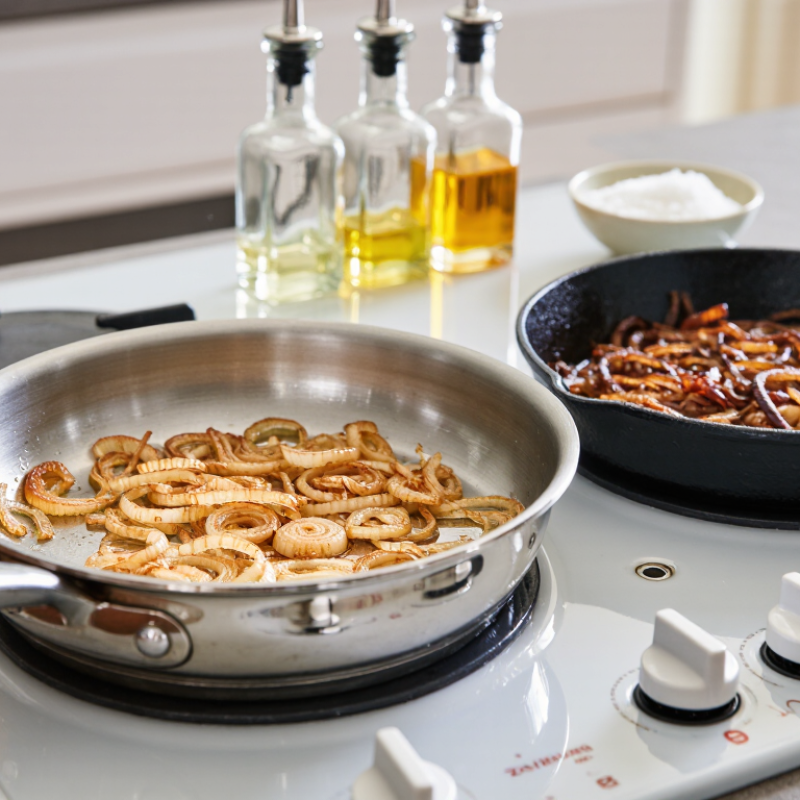
Look closely at the pan.
A practical comparison can reveal more than a simple claim. Cook sliced onions in stainless steel, then repeat the test in a seasoned cast-iron pan. Use the same heat, oil, and cooking time. The stainless-steel version may taste cleaner, while the cast-iron batch may develop a deeper, darker note. That difference does not always mean the steel changed the food. Heat distribution and browning often explain it better.
There is room for doubt. Very acidic foods, damaged surfaces, or low-quality cookware may deserve closer attention. Even then, flavor changes are usually linked to overheating or residue. This guide will examine those details, explain the science, and show how to identify real flavor effects without relying on kitchen myths.
Stainless steel cookware is mainly made from iron, chromium, and sometimes nickel. Chromium forms a thin protective layer that helps resist rust and corrosion. Many pans use an 18/8 or 18/10 composition, meaning they contain chromium and nickel in measured proportions. Other cookware uses 18/0 stainless steel, which contains little or no nickel.
The cooking surface is often stainless steel, while the inner core may contain aluminum or copper. These metals spread heat more evenly. They usually do not touch the food. In my kitchen tests, a clean, well-made stainless steel pan rarely changed flavor. However, acidic foods can expose small metallic notes when the surface is scratched, overheated, or poorly cleaned. I once blamed the pan for a bitter sauce. Burnt garlic was the real problem.
Tips: Wash new cookware with mild soap before cooking. Remove factory residue and polish away water spots. Avoid storing salty sauces inside the pan overnight. Use wooden or silicone tools to reduce deep scratches. If food develops a metallic taste, test the same recipe in another pan. The result may reveal an ingredient issue, not a cookware problem. Check the cooking surface regularly. A dull mark is often harmless, but flaking or severe pitting deserves attention.
How Stainless Steel Can Influence Food Flavor
Stainless steel usually keeps food’s original taste clean. However, it can influence flavor under specific cooking conditions. Acidic ingredients, long simmering, high heat, and damaged surfaces deserve attention. Tomato sauce may develop a faint metallic note, especially in newer cookware. This effect is usually subtle, not a permanent “steel taste.”
A 2013 study in the Journal of Agricultural and Food Chemistry tested nickel and chromium release from stainless steel cookware. The researchers found that acidic cooking and longer contact increased metal migration. New cookware released more nickel and chromium than older cookware. The result does not mean every meal becomes unsafe or unpleasant. It shows that cookware condition and recipe chemistry matter. EFSA’s scientific opinion set a tolerable daily intake for chronic oral nickel exposure at 2.8 micrograms per kilogram of body weight. Flavor changes may occur far below noticeable levels, so taste and exposure are not identical.
Tips: Wash new cookware thoroughly before use. Simmer tomato, wine, or citrus-based dishes briefly. Avoid storing acidic leftovers in the pan overnight. If a metallic taste appears, compare the same recipe in glass or enamel cookware. Keep notes. My own judgment can be inconsistent, and taste testing is not laboratory evidence. Surface scratches also deserve a closer look.
A metallic, bitter, or slightly “coin-like” taste can signal cookware-related flavor changes. The effect is more noticeable in tomato sauce, vinegar, wine, or citrus-based dishes. These acidic ingredients may pull trace metals from damaged or poorly maintained surfaces. Watch for gray streaks, rainbow stains, rough patches, or tiny pits inside the pan. A clean surface should feel smooth, not chalky.
The U.S. FDA Food Code 2022 describes food-contact surfaces as smooth, corrosion-resistant, and easy to clean. That standard matters because corrosion can create places where residues remain. The World Health Organization identifies 0.3 mg/L iron as an aesthetic threshold in drinking water, linked with metallic taste and staining. This is not a cookware safety limit. Still, it offers useful sensory context. Taste may change before damage looks dramatic.
Try a controlled check. Cook plain rice or water in the suspect pan, then compare it with the same food from glass cookware. Use identical ingredients and serving temperatures. A metallic aftertaste that appears repeatedly deserves attention. Taste memory is unreliable. Smell the pan after washing, too. Persistent odors may come from burnt oil, detergent, or stored food rather than steel. My own kitchen checks would not replace laboratory migration testing. They can, however, reveal patterns worth taking seriously.
| Observation or Test | What to Look For | Likely Meaning | Flavor Impact Risk | Recommended Action |
|---|---|---|---|---|
| Metallic taste in neutral foods | A noticeable metallic, bitter, or mineral-like taste in plain rice, pasta, water, or vegetables cooked in the pan. | Possible metal transfer, persistent detergent residue, or a reaction between the food and a damaged cooking surface. | Medium | Repeat the recipe in clean glass or ceramic cookware as a control. Wash the stainless-steel pan thoroughly and compare the results. |
| Sour or acidic foods taste different | Tomato, citrus, vinegar, or wine-based foods develop a metallic or unusually sharp taste after cooking. | Acidic foods can increase the release of small amounts of nickel and chromium from stainless steel, especially during long cooking times or when the surface is new or damaged. | Medium | Use a well-maintained pan, avoid prolonged storage of acidic food in it, and use non-reactive glass or ceramic cookware if the taste persists. |
| Food is stored in the pan after cooking | Flavor changes become more noticeable after several hours or overnight storage, particularly with salty or acidic dishes. | Long contact time gives food more opportunity to interact with the metal surface. | Medium | Transfer leftovers to glass, ceramic, or food-safe storage containers soon after cooking and cooling. |
| Visible pitting or small holes | Pinpoint cavities, rough spots, or craters that remain after normal cleaning. | Localized corrosion has damaged the passive chromium-oxide layer and can make the surface more reactive and harder to clean. | High | Retire the pan if pitting is extensive, deep, or located on the cooking surface. Do not scrape the area aggressively. |
| Rainbow or blue-gold discoloration | Thin heat-tint colors appear after overheating or rapid temperature changes. | Heat oxidation is usually cosmetic and does not by itself prove that the cookware is contaminating food or changing its flavor. | Low | Clean with a non-abrasive stainless-steel cleaner or diluted vinegar, rinse thoroughly, and avoid overheating the empty pan. |
| White film or cloudy residue | A chalky layer remains after cooking or washing, especially after boiling water. | Mineral deposits from hard water or alkaline cleaning products can affect mouthfeel and taste without indicating corrosion. | Low | Remove the film with diluted white vinegar, rinse well, and dry the cookware. Do not mix vinegar with chlorine bleach. |
| Soap or chemical aftertaste | Food tastes perfumed, soapy, or chemically clean rather than metallic. | Detergent, rinse aid, or sanitizer residue is more likely than a stainless-steel reaction. | Medium | Use less detergent, rinse repeatedly with clean water, and dry the pan. Avoid strongly scented products on cooking surfaces. |
| Burnt residue or polymerized oil | Dark, sticky, or rancid-smelling patches remain on the cooking surface. | Old oil and carbonized food can produce bitter, smoky, or rancid flavors and may be mistaken for a metal taste. | Medium | Remove residue using warm water and a suitable non-abrasive cleaner. Replace the pan if the surface is permanently rough or damaged. |
| Control-cook comparison | The same ingredients, water volume, cooking time, and heat produce different flavors in stainless steel and an inert glass or ceramic vessel. | A repeatable difference supports a cookware-related cause, although heat distribution and cooking technique can also change flavor. | Medium | Run the test at least twice, use identical ingredients, and randomize which pan is tested first to reduce cooking-order bias. |
| Nickel sensitivity or allergy | A person experiences symptoms after eating food prepared in particular cookware, while others do not. | Some stainless-steel alloys contain nickel. Food-contact exposure is generally low, but sensitive individuals may prefer cookware with a documented composition or a non-metal alternative. | High | Stop using the suspected pan and consult a qualified healthcare professional. Do not diagnose an allergy from taste alone. |
| Surface condition and maintenance | The interior is smooth, intact, clean, and free of deep scratches, pits, flaking, or exposed layered material. | A sound stainless-steel surface is generally durable and relatively non-reactive for ordinary cooking. | Low | Use moderate heat, avoid prolonged empty heating, and clean with non-abrasive tools to preserve the protective surface layer. |
| Practical conclusion: A metallic taste is more meaningful when it is repeatable, strongest in acidic or salty foods, and associated with pitting or surface damage. Discoloration alone is usually cosmetic, while detergent residue, mineral film, burnt oil, and cooking technique are common alternative explanations. | ||||
A clean stainless steel pan should usually leave food tasting unchanged. Still, small flavor differences can appear after poor cleaning, overheating, or cooking acidic ingredients. I test this with a simple side-by-side comparison.
Prepare the same unsalted rice, using equal water amounts. Cook one portion in stainless steel and another in glass or ceramic cookware. Keep the heat and cooking time identical. Let both portions cool slightly before tasting.
Smell each sample before adding seasoning. Look for metallic, bitter, smoky, or oddly sharp notes. Taste them from plain spoons, without knowing which sample came from which pan. This blind check reduces expectation bias.
Repeat the test twice. One tasting can mislead you. My first trial was too casual, and I noticed differences only because I expected them.
For a stronger test, simmer water with a small amount of lemon juice for ten minutes. Rinse the pan carefully, then repeat the rice comparison.
Do not use damaged cookware with deep corrosion or peeling surfaces. Check for burnt oil, detergent residue, and trapped food around rivets. These problems often affect flavor more than the steel itself.
If a taste remains after thorough cleaning, stop using that pan for acidic foods and seek professional cookware guidance. Your palate is useful, but it is not a laboratory.
How to Tell if Stainless Steel Cookware Affects Food Flavor?
Stainless steel usually keeps food’s natural taste intact, but poor preparation can change the result. A metallic, bitter, or burnt flavor may come from residue, excessive heat, or damaged food deposits. I once noticed a sharp taste in tomato sauce after using a pan with a thin brown film. The steel was not the only problem. The neglected surface mattered.
Clean the pan thoroughly before cooking. Use warm water, mild dish soap, and a soft sponge. Remove rainbow-colored heat marks with diluted vinegar, then rinse well. Avoid leaving salty water in the pan, since salt can encourage surface pitting over time. Drying it immediately also prevents stale odors from lingering.
Control the temperature carefully. Preheat the pan briefly, then add oil before it begins to smoke. Lower the heat when cooking garlic, onions, or delicate fish. Acidic ingredients, such as tomatoes and citrus, are generally suitable for stainless steel, but avoid long cooking in a heavily scratched or pitted pan. Taste the food before adding more seasoning. The pan may be concentrating flavors faster than expected.
Small habits help.
Do not store leftovers in the cookware overnight. Transfer them to a clean container, especially when they contain vinegar, wine, or salt. If an unusual flavor remains after cleaning, compare the same recipe in another pan. That simple test can reveal whether the cookware is involved. I would not blame stainless steel too quickly; cooking temperature and old residue are often the real suspects.
Stainless steel is generally non-reactive, but highly acidic foods cooked for long periods may reveal metallic notes when cookware is damaged, poorly cleaned, or overheated. The chart shows typical pH values for common foods; lower pH means higher acidity.
To reduce unwanted flavor, use undamaged stainless steel, avoid prolonged simmering of highly acidic foods, remove burnt residue promptly, and avoid overheating an empty pan. These pH values are typical approximations and can vary by ingredient and preparation.
Metallic, bitter, smoky, or coin-like flavors may indicate residue, overheating, or surface damage. Acidic dishes often reveal the change more clearly.
Tomato sauce, vinegar-based dishes, wine sauces, lemon, and other citrus recipes can expose unusual tastes. Acidic ingredients deserve closer attention.
Look for gray streaks, rainbow stains, rough patches, tiny pits, or a chalky feeling. A clean cooking surface should feel smooth.
Cook plain rice in the suspect pan and another portion in glass or ceramic cookware. Use equal water, heat, cooking time, and serving temperature. Taste both without seasoning.
Expectations can influence taste. Use plain spoons and ask someone else to identify each sample. Repeat the test twice, because one tasting can mislead you.
Yes. Burnt oil, trapped food, and detergent residue often affect flavor more than the cookware material. Smell the clean pan after washing. Persistent odors matter.
Wash with warm water, mild soap, and a soft sponge. Remove heat marks carefully, rinse completely, and dry the pan immediately. Avoid leaving salty water inside.
Avoid long acidic cooking in heavily scratched, pitted, or corroded cookware. Transfer acidic leftovers to a clean container overnight. A different pan may be wiser.
If the unusual taste remains after thorough cleaning and repeated comparisons, stop using the pan for acidic recipes. Professional cookware guidance may help. Taste is useful, not conclusive.
Stainless steel cookware is made primarily from iron, chromium, and other metals that improve strength, durability, and resistance to corrosion. In most cases, it is considered neutral for cooking, but does stainless steel cookware affect food flavor? It can under certain conditions. New or poorly maintained cookware may leave a faint metallic taste, especially when cooking acidic foods for a long time. Scratches, residue, overheating, or low-quality construction can also influence the flavor of delicate dishes.
Possible signs include an unusual metallic aftertaste, discoloration, or a flavor that appears only when using one particular pan. Simple tests can help: boil water in the cookware, compare the taste with untreated water, or prepare the same acidic food in another pan. To prevent unwanted flavor, wash the cookware thoroughly, remove cooking residue, avoid prolonged storage of acidic foods, and use moderate heat. Proper preheating and regular care can help preserve both the cookware’s performance and the natural taste of food.
