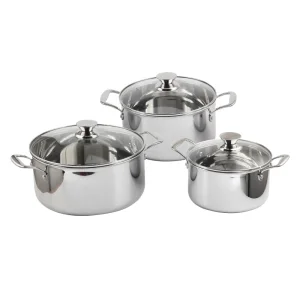
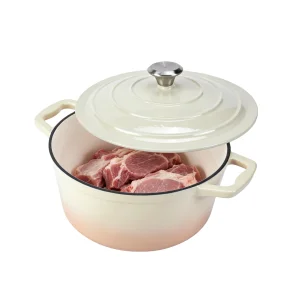
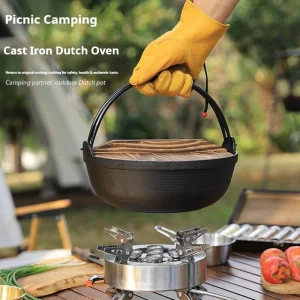
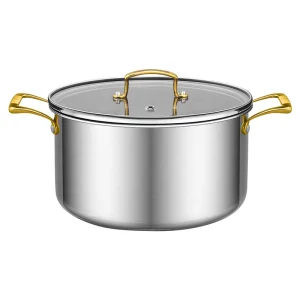
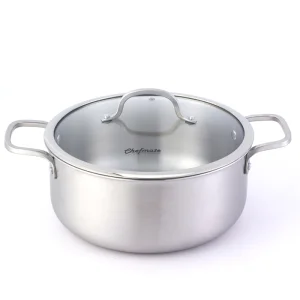
High-performance stainless steel and cast iron induction dutch ovens optimized for commercial distribution and premium retail positioning.
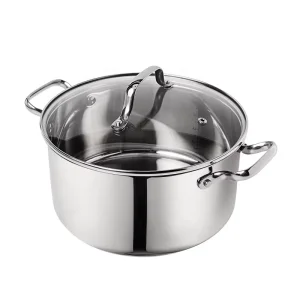
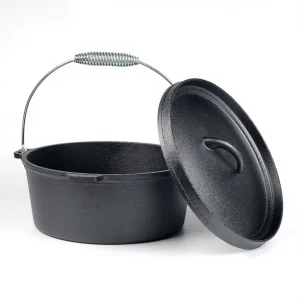
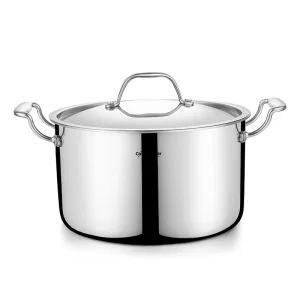
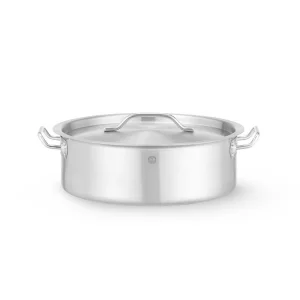
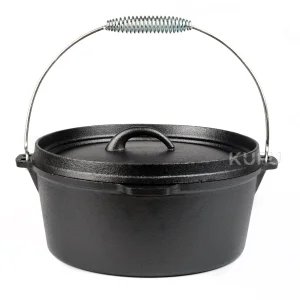
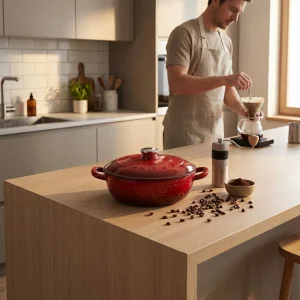
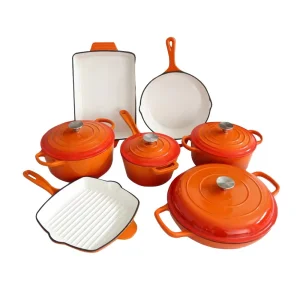
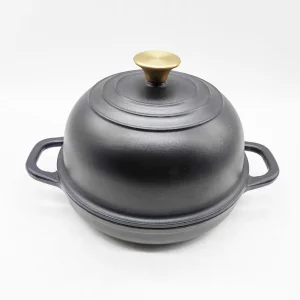
Bridging the gap between heavy traditional cast iron and advanced metallurgical efficiency for modern global hospitality and retail brands.
In the global B2B culinary sector, the Stainless Steel Dutch Oven has established itself as an indispensable workhorse. While cast iron traditionally dominated this market, the modern commercial environment demands equipment that offers rapid thermal reaction times, structural lightness, and imperviousness to acidic ingredients. As a leading manufacturer and supplier, Foshan Sarap Kitchen Co., Ltd. spearheads this transition by engineered cladding configurations that balance commercial durability with thermal precision.
This whitepaper provides an exhaustive technical and market analysis of stainless steel Dutch ovens. By examining material sciences (multi-ply cladding), factory supply chain structures, localized market requirements, and rigorous quality testing parameters, global distributors can gain a thorough understanding of their procurement choices. Through providing these detailed technical blueprints, we aim to deliver clear information gain to purchasing directors, cookware brand owners, and logistics professionals worldwide.
Deconstructing the structural composition that drives superior thermal efficiency and long-term durability in high-volume foodservice settings.
The core differentiation between a standard residential pot and an industrial-grade Dutch oven lies in the composition of its body. Standard cookware often uses impact-bonded bases, where an aluminum disc is pressed only onto the bottom. In contrast, Tri-Ply and 5-Ply fully clad constructions extend the thermal core from the base all the way up the sidewalls, preventing hot spots and ensuring uniform stewing and braising.
| Layer Class | Material Specification | Primary Engineering Function | Thermal Conductivity (W/m·K) |
|---|---|---|---|
| Inner Cooking Surface | SUS304 (18/10 Food-Grade Stainless Steel) | Corrosion resistance, inert to acidic foods, high durability | ~ 16.2 |
| Core Layer (Mid-1) | Alpure 1050 / 3003 Pure Aluminum | Rapid thermal absorption and uniform heat diffusion | ~ 205.0 |
| Outer Base Layer | SUS430 (Ferritic Magnetic Stainless Steel) | Induction readiness, high-frequency electromagnetic response | ~ 26.0 |
| Advanced Core (5-Ply only) | Alloy 3004 / Copper Core inserts | Exttreme heat retention, structural warp resistance | ~ 180 - 390 |
For commercial clients buying in volume, understanding the trade-off is critical. Impact-bonded stock pots and Dutch ovens present a lower upfront CAPEX, suitable for general boiling and volume catering. However, for precise simmering, sauce preparation, and low-moisture slow cooking, fully-clad options yield up to 30% reduction in energy usage and minimize food spoilage from localized burning.
Leveraging localized industrial clusters to secure competitive cost structures, quality consistency, and export agility.
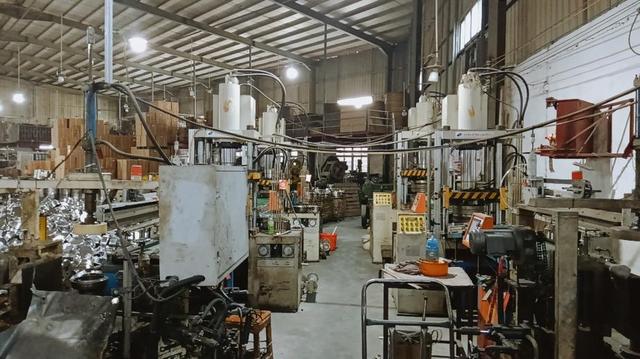
Located in Guangdong Province, Foshan Sarap Kitchen Co., Ltd. operates within the world’s most dense kitchenware manufacturing cluster. This geographical positioning provides our clients with unmatched advantages. The immediate access to raw steel strip processing, specialized automated polishing line manufacturers, and custom die tool makers allows for rapid prototyping and production scalability.
Our engineering team translates custom CAD drawings into functional prototypes within 14-21 working days, utilizing advanced multi-axis CNC tooling machines.
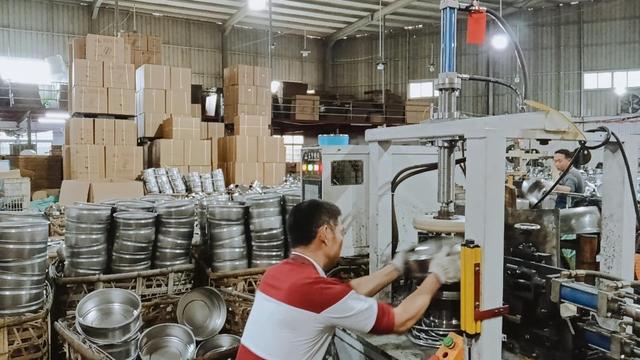
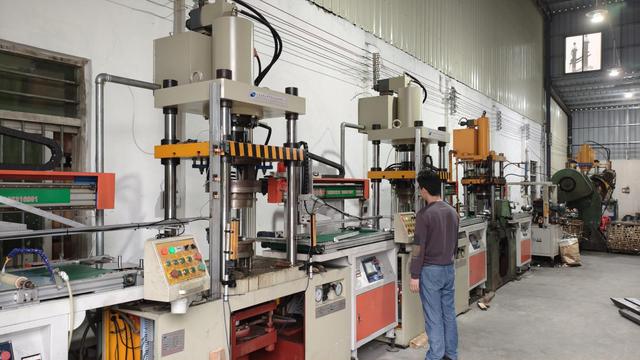
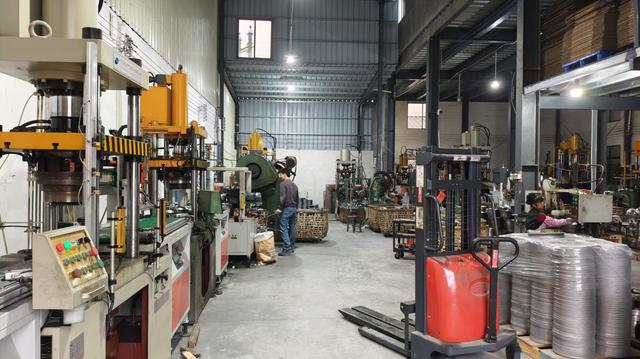
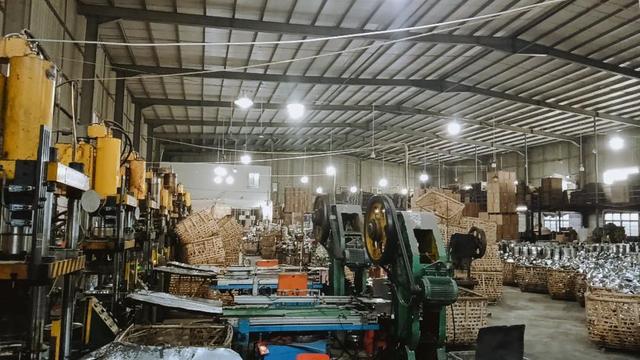
By utilizing automated hydraulic press lines, we maintain physical consistency across production runs, minimizing surface defects and guaranteeing dimensional accuracy.
Proximity to Nansha, Shekou, and Yantian ports provides competitive ocean freight structures and flexible multimodal transport connections globally.
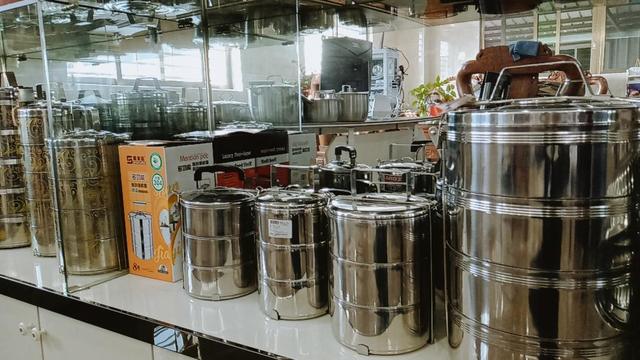
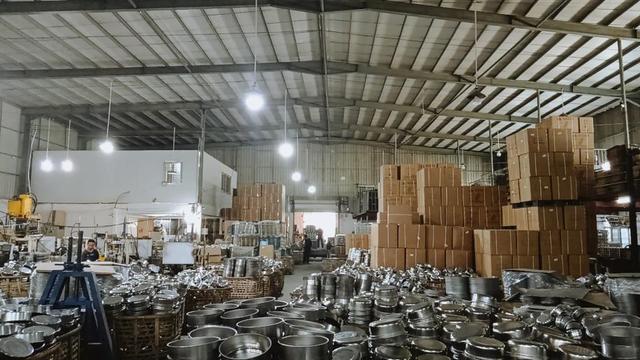
Operating a manufacturing plant covering 22,000 square meters and employing a team of over 250 skilled staff members, Foshan Sarap Kitchen Co., Ltd. processes hundreds of metric tons of stainless steel monthly. Our capabilities extend beyond simple metal stamping; we offer end-to-end design, tooling fabrication, automated polishing, handle riveting, induction bottom brazing, and extensive laboratory stress testing.
Adapting cookware specifications to meet the specific requirements of regional markets and target demographics.
High demand for 5-Quart and 6-Quart capacities tailored to artisan sourdough bread baking and home culinary hobbies. Demands colorful packaging and aesthetic finish styles (two-tone visual designs).
Requires strict compliance with LFGB and DIN EN 12983-1 standards. Demands ergonomic, hollow-cast stay-cool handles and seamless, weld-free interior structures to ensure food hygiene safety.
Focuses on large capacities (8L to 15L+ stew pots) capable of operating on high-output gas rings. Focuses on reinforced handle structures and thicker base sheets to withstand thermal stress.
Strong shift towards induction-compatible bottom plates. Flat, high-responsiveness magnetic stainless steel bases (SUS430) are essential to match modern compact kitchens and cooktops.
Integrating materials engineering and sustainability initiatives into the next generation of professional cookware.
The commercial cookware industry is undergoing rapid changes driven by environmental regulations and advances in food science. Foshan Sarap Kitchen Co., Ltd. maintains a dedicated R&D team working on product improvements. Our technology roadmap focuses on three main developments:
Developing hybrid textured ceramic surfaces that offer non-stick characteristics without the use of chemical fluoropolymers (PTFE, PFOA, PFAS), meeting upcoming European Union regulations.
Integrating specialized manganese-hardened alloys into multi-ply cores to prevent bottom warping under sudden thermal shocks, extending commercial service life by up to 40%.
Adopting clean-burning electric induction smelting for cladding processes and recycling 95% of industrial wastewater from polishing and washing cycles.
Ensuring seamless import processes through verified quality documentation and international standardization compliance.
Importing cookware in large volumes requires strict adherence to localized food contact material regulations. Failure to meet these requirements can lead to customs seizures and financial losses. At Sarap Kitchen, we mitigate these risks through comprehensive testing protocols:
All raw materials undergo regular testing for heavy metal leaching (lead, cadmium, nickel, chromium) to ensure complete safety compliance for food contact.
Our quality management protocols track production from incoming coil inspections through stamping, cladding, and final post-polishing checks.
We provide full supply chain transparency to support the ESG requirements of major international retailers, maintaining high labor and safety standards.
Finished batch samples are subjected to intensive salt-fog environments to verify resistance to pitting and surface rust under acidic conditions.
Direct answers to technical queries, shipping metrics, customization options, and wholesale terms.
Our standard MOQ for custom packaging, customized dimensions, and private-label handles ranges from 500 to 1,000 units per size, depending on the complexity of the tooling. For stock items or standard designs with laser-etched logos, we can accommodate smaller trial orders starting from 200 units.
We employ high-pressure impact bonding and cold-press cladding technologies. By integrating a thick pure aluminum core between SUS304 and SUS430 stainless steel sheets, the different thermal expansion rates are neutralized. This structural design prevents the base from bowing inward or outward when heated.
Generally, the first production cycle for OEM orders requires 35-45 days, which includes tooling adjustments and packaging proof approval. Subsequent repeat orders are completed and ready for port dispatch within 25-30 days.
Yes, we offer comprehensive OEM and ODM support. Clients can choose from cast stainless steel, hollow-weld, gold-plated, or silicone-coated handles. We also offer options for tempered glass lids or matching stainless steel lids, as well as customized master cartons and retail boxes.
Stainless steel is lighter, dishwasher-safe, does not chip, and responds quickly to temperature changes. Enameled cast iron offers high heat retention but is heavy, brittle, and susceptible to chipping. Multi-ply stainless steel combines the heat distribution of aluminum with the durability of steel.
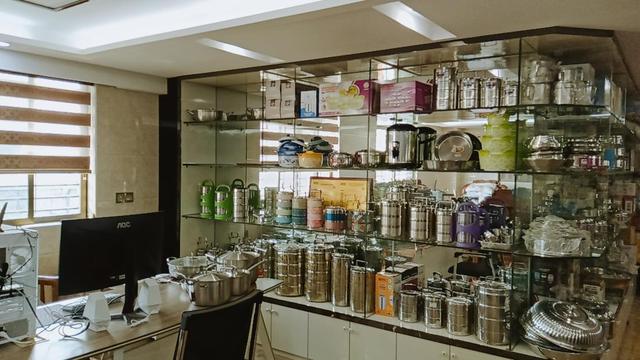
Our complete line of specialized multi-ply stock pots, enamel casseroles, and electric commercial cookers.