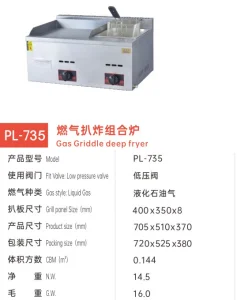
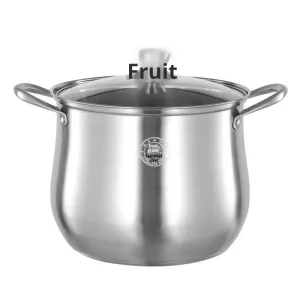
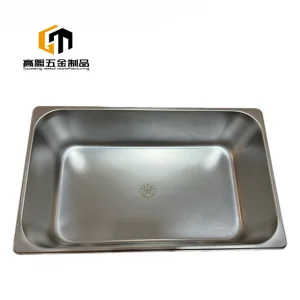
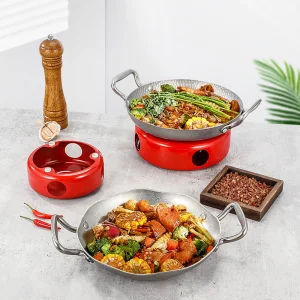
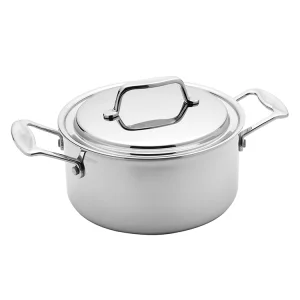
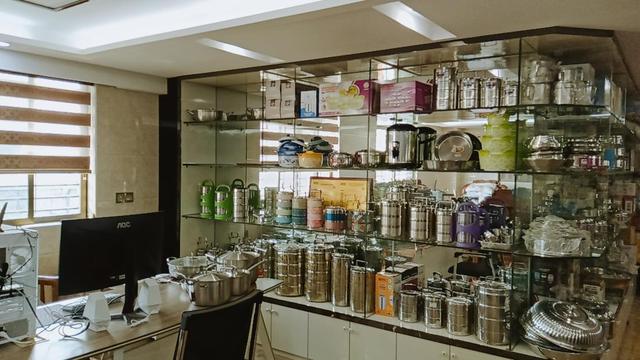
Explore our industry-grade stainless steel pots, skillets, and specialized cookware designed for high-stress professional kitchens.
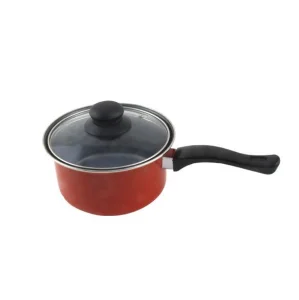
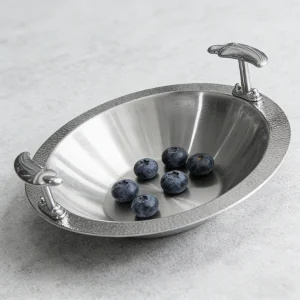
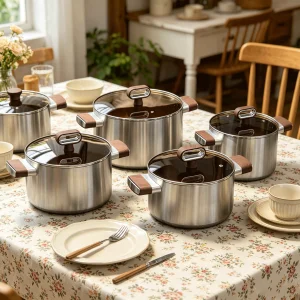
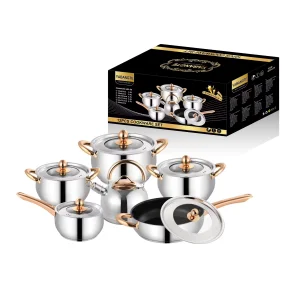
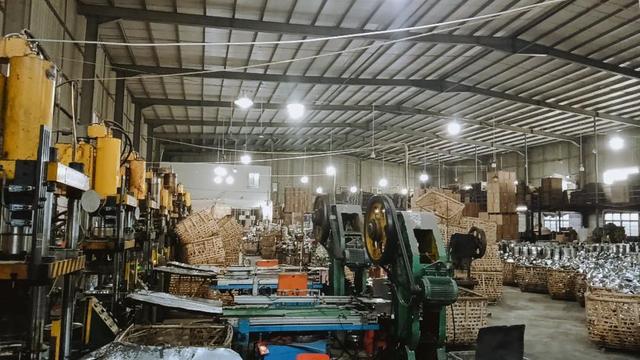
Established in 2011 in Foshan, Guangdong Province—the epicenter of China's high-tech metal manufacturing and hardware ecosystem—Foshan Sarap Kitchen Co., Ltd. has grown to become a cornerstone manufacturer specializing in premium stainless steel cookware and customized kitchenware. Built upon a state-of-the-art facility spanning over 22,000 square meters and powered by more than 250 skilled metallurgical experts and operations engineers, we are uniquely equipped to meet the technical demands of the global hospitality, catering, and retail markets.
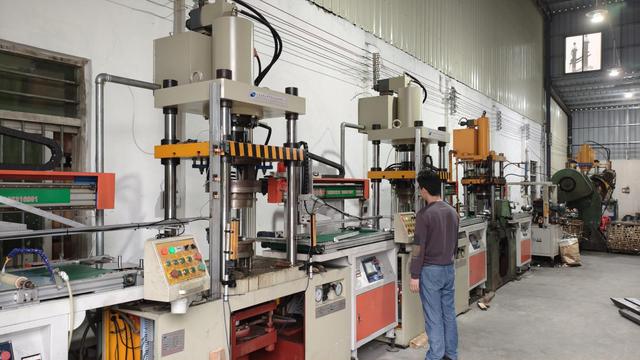
Our manufacturing philosophy focuses deeply on material integrity. We utilize multi-ply cladding technology (such as 3-ply and 5-ply designs) combining the safety and corrosion-resistance of AISI 304/316 Stainless Steel with the fast, uniform thermal dispersion profiles of pure grade aluminum cores. By marrying automated polishing lines with robotic stamping presses, Sarap Kitchen delivers cookware that endures the rigorous mechanical stress of professional hot lines.
"We do not merely manufacture vessels; we design thermodynamic solutions that elevate chef efficiency, reduce energy overheads, and guarantee compliance under international sanitary codes."
China's dominance in commercial kitchen supply chains is no longer defined by cost arbitration alone. Today, it is defined by systemic technological integration, speed-to-market, and materials-science mastery.
Located inside China’s stainless steel industrial belt, we gain direct, tariff-optimized access to premium ores and complex composite metals. This proximity ensures our multi-ply stockpot bottoms remain structurally perfect under extreme thermal expansion cycles.
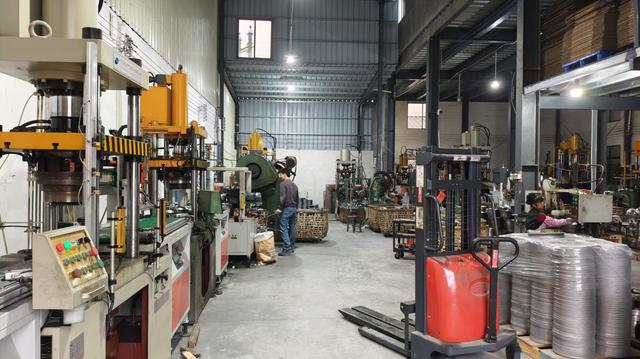
Through automated welding, deep-drawing hydraulic presses, and multi-stage polishing stations, we guarantee sub-millimeter dimensional tolerances. This automation reduces human-error variance across high-volume container runs.
Our Foshan laboratory conducts intensive testing: chemical composition analysis, salt spray corrosion evaluations, and base bonding tests. We ensure compliance with FDA, LFGB, and NSF sanitization requirements for food contact surfaces.
From the expansion of induction cooking technology to strict global carbon emission directives, kitchen environments require hardware that is smarter, cleaner, and thermally agile.
Legacy aluminum or basic copper vessels fail on modern induction cooktops. Our cookware integrates magnetic stainless steel (AISI 430) cladding at the base, optimizing magnetic flux transfer. This ensures energy efficiency levels above 90%.
Commercial environments demand coatings that resist metal utensil scoring and continuous high temperatures. Sarap Kitchen uses multi-layer reinforced systems featuring titanium and ceramic compounds to achieve high release metrics and wear durability.
A boiling stockpot represents a major safety hazard. Our hollow-cast, riveted handles use thermal isolation points to remain cool, preventing chef fatigue and burns under heavy workloads.
Commercial cookware is not a one-size-fits-all product. Different culinary setups require targeted hardware designs to balance thermal speed, capacity, and sanitation protocols.
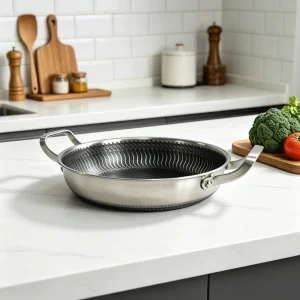
Requires rapid heat response to manage precise reductions and delicate proteins. Our 3-Ply and 5-Ply copper/aluminum core pans are the perfect choice, delivering heat control that matches the chef’s immediate heat inputs.
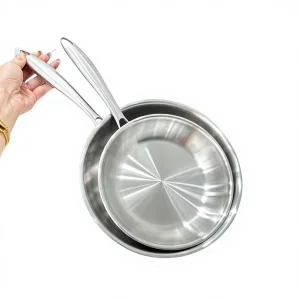
Focuses on high output speed, absolute durability, and simple maintenance. Our impact-bonded heavy duty frying pans withstand rapid thermal shocks and automated high-temperature dishwashing without warping.
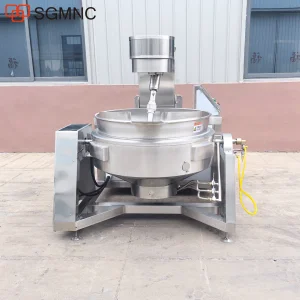
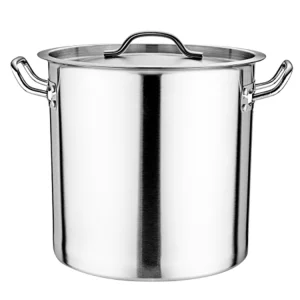
Large-batch stockpots and steam jackets (ranging up to 100+ liters) require structural rigidity to support heavy loads. Our reinforced rims and heavy-gauge base walls ensure safe liquid transport and prevent boiling boil-overs.
Demands corrosion resistance against saline marine air. Utilizing surgical grade AISI 316 stainless steel with molybdenum additives prevents pitting corrosion and surface breakdown under harsh environments.
Underpinned by modern hardware manufacturing lines, our 22,000 square meter factory is optimized for transparent quality control, from sheet metal cutting and drawing to final mirror polishing.
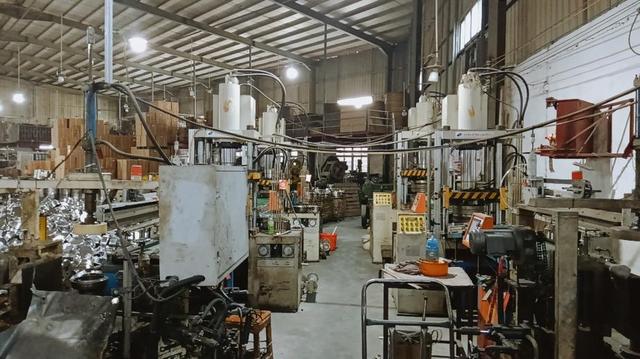
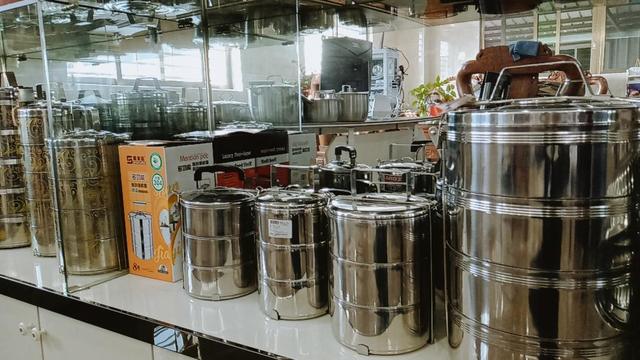
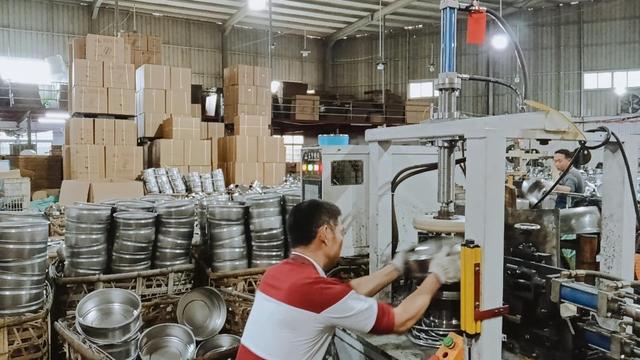
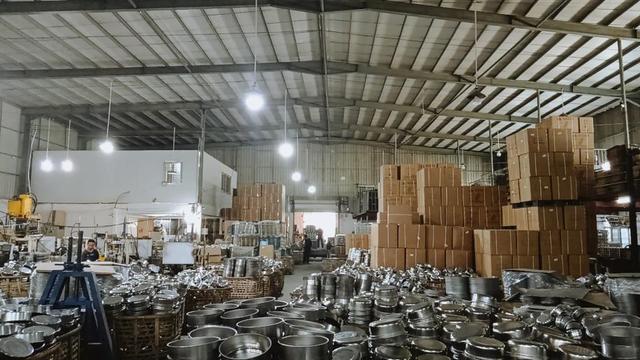
For global brands, hotel purchasing groups, and distributors, our OEM and ODM programs offer a streamline pathway to product differentiation. We manage every development stage in-house to secure intellectual property rights and reduce lead times.
Our engineers convert concepts into detailed CAD files. Working with your design criteria, we analyze wall thicknesses, thermal curves, and weight distributions before creating physical sample molds.
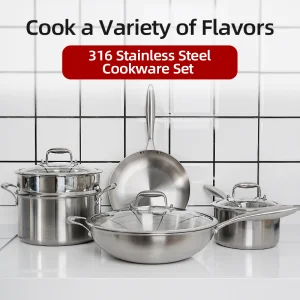
Select from AISI 304, AISI 316, or tri-ply options. We offer diverse surface treatments, including exterior mirror polishing, interior satin sandblasting, premium non-stick coatings, or titanium-plasma plating.
We support private labeling with laser engraving, bottom etching, and custom-cast handle inserts. Our packaging lines are also optimized for retail display boxes or high-density protective B2B shipping packs.
Our shipping department coordinates with freight carriers worldwide. By providing comprehensive customs documentation, certification clearances, and batch test reports, we streamline imports through all major ports.
Get authoritative answers to technical engineering and manufacturing questions from our metallurgical division.
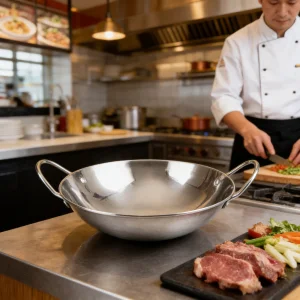
Examine our high-volume cooking pots, specialized dry woks, and customized catering solutions for global delivery.