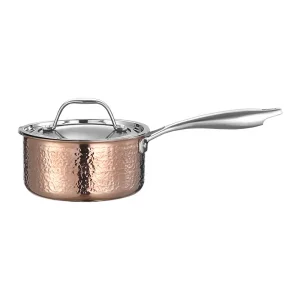
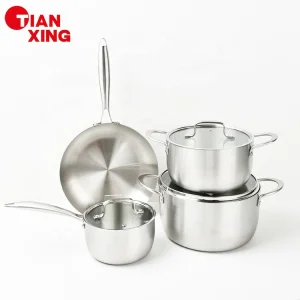
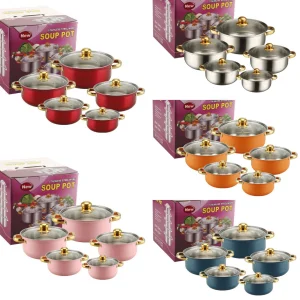
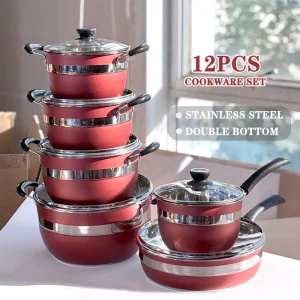
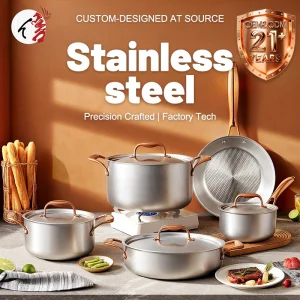
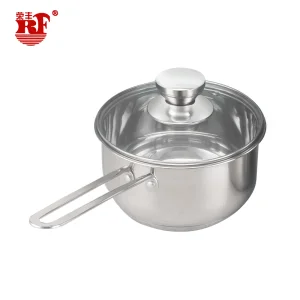
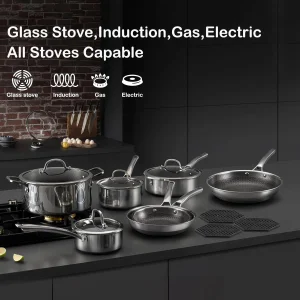
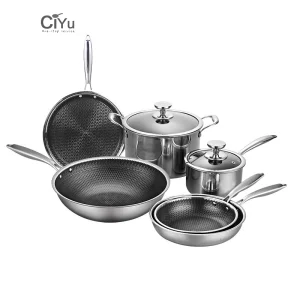
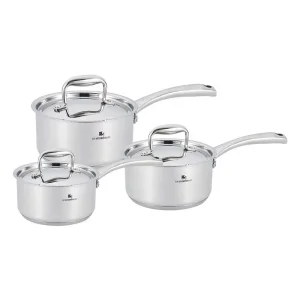
Explore our leading commercial and residential stainless steel saucepan designs engineered at our specialized manufacturing facility.

An authoritative analysis of stainless steel kitchenware manufacturing paradigms and raw material sourcing strategy.
The global commercial and residential culinary landscape demands unprecedented levels of efficiency, durability, and health compliance from cookware suppliers. At the heart of this demand are stainless steel saucepans, which serve as foundational equipment across fine-dining institutions, large-scale hospitality operations, and domestic kitchens alike. As market dynamics evolve, global sourcing directors look beyond mere price metrics to evaluate factories based on technological depth, metallurgical stability, and systemic supply chain integration.
Modern stainless steel saucepan manufacturing is a complex convergence of metallurgical science and structural engineering. In professional operations, a saucepan is subjected to high thermal loads, chemical exposure from acidic food compounds, and mechanical stress from high-volume operations. To construct products that endure, manufacturers must employ strict grades of raw material—principally SUS304 (18/10 or 18/8 configuration) and SUS316 austenitic stainless steels. These grades present optimal oxidation resistance, preventing chromium depletion at the surface and inhibiting localized corrosion or pitting.
Clad cookware engineering utilizes high-pressure bonding to combine conductive aluminum cores with sterile, non-reactive stainless steel surfaces, reducing thermal lag by 45%.
To enable compatibility with high-efficiency induction stovetops, modern factories weld a structural bottom layer of magnetic AISI 430 stainless steel via high-impact friction technology.
A benchmark of manufacturing capacity and technological infrastructure in Guangdong’s premier industrial zone.
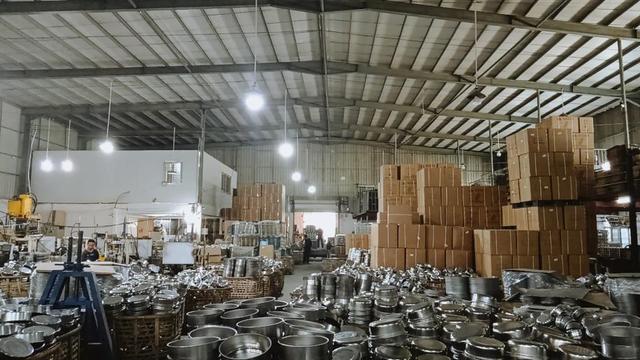
Established in 2011, Foshan Sarap Kitchen Co., Ltd. stands as a premier manufacturer specialized in stainless steel cookware and kitchenware systems designed for global distribution. Situated in Foshan, Guangdong Province—a historic center of precision metallurgy and high-end consumer goods manufacturing—the organization operates within a highly localized ecosystem that streamlines material acquisition, technological updates, and international logistics. Spanning an expansive facility of over 22,000 square meters and powered by a highly trained workforce exceeding 250 professional employees, Sarap Kitchen executes high-volume, precision manufacturing with consistent reproducibility.
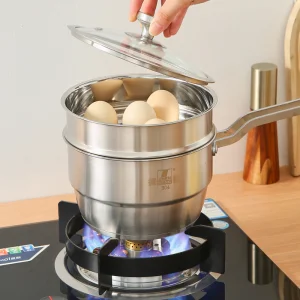
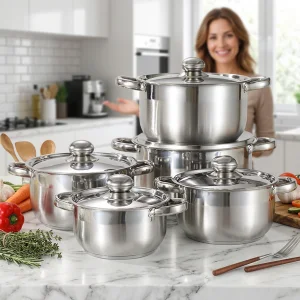
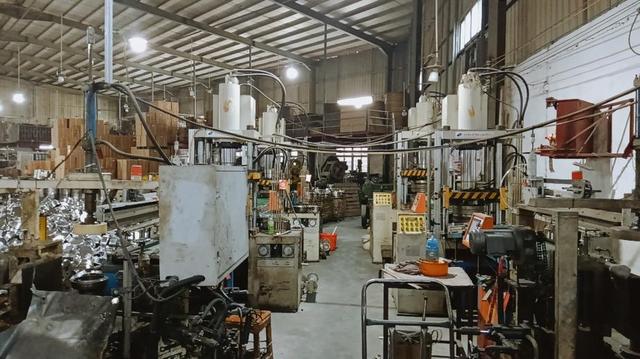
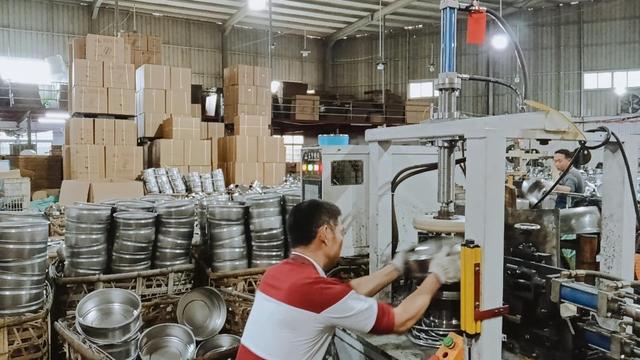
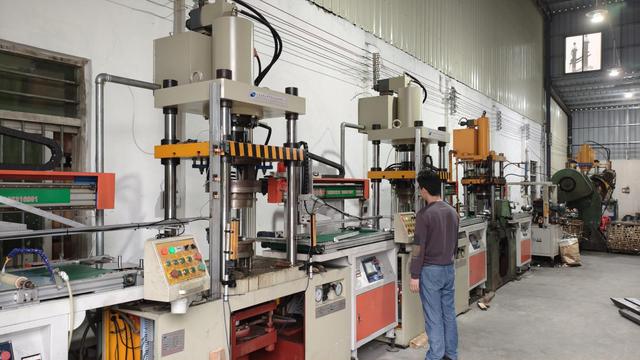
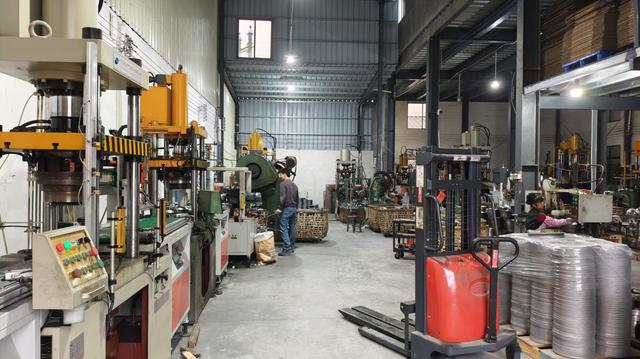
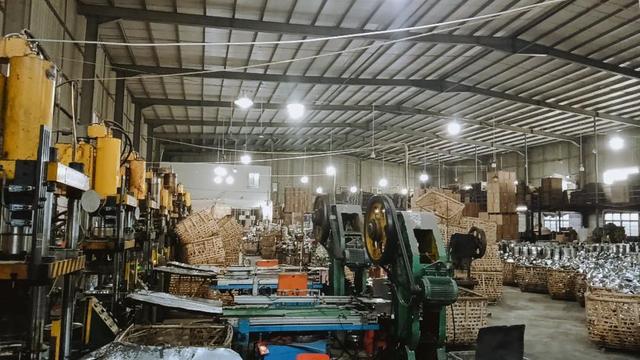
The company’s manufacturing portfolio features a complete line of cookware, including frying pans, saucepans, stock pots, sauté pans, casserole pots, steamers, and comprehensive multi-piece sets. Each production line utilizes advanced equipment: automated hydraulic deep-drawing presses, CNC machining centers for handle mounting and rim treatment, and modern polishing lines capable of achieving mirror, satin, or specialty hammered surface finishes. This robust machinery infrastructure allows the plant to handle large production quotas while keeping close tolerances on mechanical and thermal specifications.
| Production Dimension | Factory Specifications & Capabilities | Supply Chain Value Offered |
|---|---|---|
| Material Calibration | Premium SUS304 / SUS316 / SUS430 Tri-Ply Alloys | Elevated corrosion resistance, food-grade purity |
| Forming & Molding | 800-Ton to 1200-Ton Automated Drawing Presses | High structural integrity, uniform wall thickness |
| Base Construction | Impact Bonding & Tri-Ply Cladding Systems | Delivers rapid, uniform heat distribution (no hot spots) |
| Handle Integration | High-Tension Riveting & Argon Arc Spot Welding | Ergonomic safety, long operational lifespans |
| Compliance Framework | FDA, LFGB, BSCI, ISO 9001:2015 Certifications | Simplified global customs clearance and market entry |
Deep technical insights into metallurgical construction and thermal dynamics of professional saucepans.
Standard single-layer stainless steel cookware possesses relatively poor thermal conductivity, which often leads to uneven heat distribution and localized scorching. To counteract this limitation, Sarap Kitchen implements multi-layer laminating and bonding technologies:
1. Tri-Ply Clad Construction: The entire saucepan body is built using three layers of metal bound under high pressure. The inner cooking surface is composed of food-grade SUS304 (18/10 Stainless Steel) for optimal hygiene and chemical resistance. The core is high-purity aluminum, known for its excellent thermal diffusivity. The outer layer is magnetic SUS430 stainless steel, ensuring total compatibility with commercial induction cooktops.
2. Impact Bonded Encapsulated Bases: For configurations requiring specialized wall and bottom dynamics, the factory applies an impact-bonded bottom disc. Using a high-tonnage friction press, the aluminum core and induction-ready bottom steel are fused to the base of the saucepan body. This ensures a mechanical bond free of air pockets, maximizing thermal transfer efficiency and eliminating thermal warping over years of heavy service.
The ergonomics of handle design also play a major role in commercial safety. Handles are crafted from cast stainless steel, designed with hollow configurations to restrict thermal conduction from the saucepan body. They are mounted using heavy-duty rivets to withstand shear stresses in professional commercial environments.
Understanding regional compliance, procurement standards, and distinct commercial market applications.
Requires compliance with FDA material safety requirements, strict heavy metal migration testing, NSF safety listing, and compatibility with heavy-duty commercial dishwashers.
Requires LFGB (Lebensmittel- und Futtermittelgesetzbuch) testing, heavy metal limit adherence, REACH compliance, and increasingly, BSCI/SEDEX audits verifying social compliance at the factory.
Demand in regions like Southeast Asia and South America centers on high-integrity multi-piece sets with double-bottom designs that deliver durability at accessible capital points.
B2B procurement agents face varying distribution standards depending on their market. In the European hospitality segment, saucepans must withstand direct gas heat alongside rapid heating via high-power commercial induction ranges. This requires high structural stability to prevent base deflection (warping upwards or downwards), which reduces heating efficiency on flat induction surfaces.
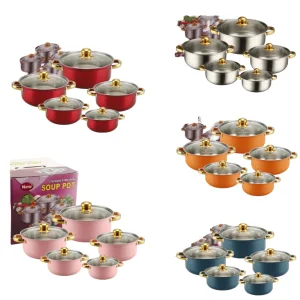
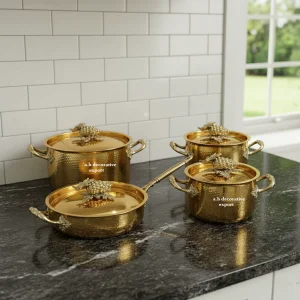
Additionally, private label brands require flexibility in custom options. Through its OEM/ODM services, Sarap Kitchen enables custom configuration of wall thicknesses (ranging from 0.6mm to 3.0mm), diverse exterior finishes (such as electroplated gold handles, ornate hand-hammered designs, and satin interiors), and customized gift packaging. These options allow brands to position products effectively within their local target markets.
The evolutionary trajectory of cookware fabrication: Automation, Sustainability, and Smart Design.
The manufacturing sector for stainless steel saucepans is moving toward cleaner production processes and automated quality control. Future operations prioritize reducing carbon footprints throughout the production cycle. Key developments in Sarap Kitchen's roadmap include:
1. Carbon Reduction: Working closely with raw steel producers to secure low-carbon recycled stainless steel coils, aligning with global green initiative mandates.
2. Advanced Laser Etching & Surface Micro-Textures: Investing in laser-etched honeycomb patterns and micro-embossed physical non-stick structures. These designs eliminate the need for chemical non-stick coatings (like PFOA/PFAS) while keeping food release properties high and ensuring durability.
3. Smart Manufacturing: Deploying robotic polishing lines to improve surface consistency and utilizing automated vision inspection systems to verify dimensions down to the micron. This keeps defects low and ensures reliable consistency across large production runs.
Transitioning to raw steel materials with 75% recycled content, helping brands lower their scope 3 emissions without sacrificing tensile strength or corrosion resistance.
Implementing laser welding and multi-axis CNC machines to construct seamless transitions from saucepan body to handle attachment points.
Direct technical answers to help purchasing managers make informed procurement decisions.
These numbers represent the percentages of chromium and nickel in the alloy. 18/10 contains 18% chromium and 10% nickel, offering the highest corrosion resistance and a long-lasting shine. 18/8 contains 8% nickel and is also highly resistant. 18/0 contains negligible nickel, making it magnetic and commonly used for the outer bottom layer of cookware to ensure induction compatibility, though it is less resistant to corrosion on its own.
Stainless steel on its own is a poor heat conductor. Tri-ply construction sandwiches a highly conductive aluminum core between two layers of stainless steel. This design ensures heat is distributed evenly across the bottom and up the sides of the pan, reducing hot spots, preventing burning, and improving cooking efficiency.
We support customization across multiple parameters, including body wall thickness (0.6mm to 3.0mm), multi-ply structures, custom handle designs (cast, wire, tubular, or heat-resistant silicone), custom lid types (tempered glass or stainless steel), custom surface treatments (mirror polish, satin, gold accents, or hammered patterns), and bespoke branding and packaging options.
All products undergo strict testing to meet international food safety standards, including FDA regulations in the United States and LFGB requirements in Europe. We conduct regular raw material spectral analyses, heavy metal migration tests, and structural durability assessments. Additionally, our facility undergoes periodic BSCI and ISO 9001:2015 quality management audits to ensure consistent manufacturing practices.
A transparent look inside our manufacturing processes, including automated metal drawing, precision polishing, and packaging lines.
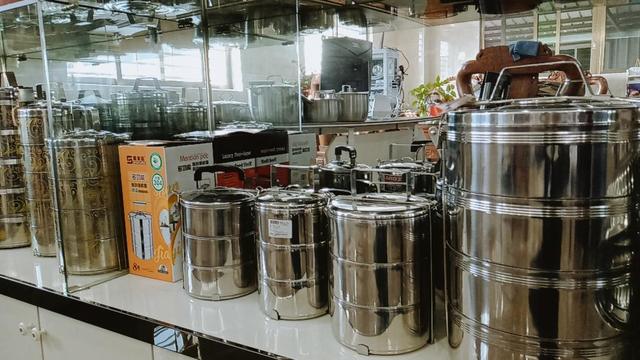
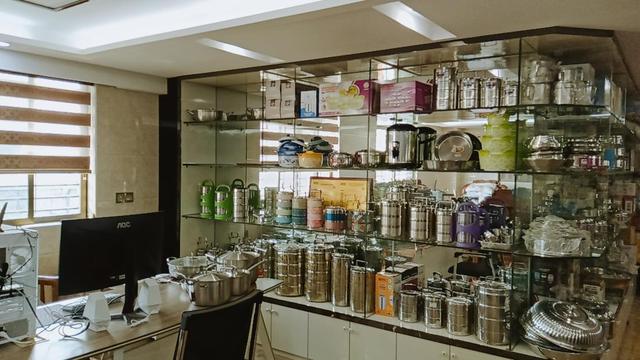
Explore our wide selection of specialty saucepans, milk pots, and multi-piece cookware sets designed for retailers and brands.