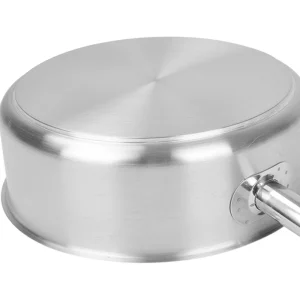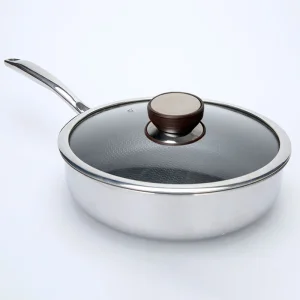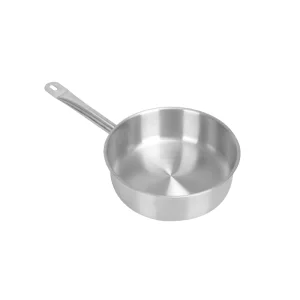
While stainless steel offers unparalleled durability, hygiene, and chemical stability, its thermal conductivity is relatively low. To overcome this, advanced factories utilize 3-ply, 5-ply, or copper-core cladding. By bonding layers of high-purity aluminum or copper between food-grade 18/10 (SUS304) stainless steel on the cooking surface and magnetic 18/0 (SUS430) stainless steel on the exterior, manufacturers create a sandwich structure that transfers heat uniformly across the bottom and up the vertical walls of the saute pan, eliminating hotspots.
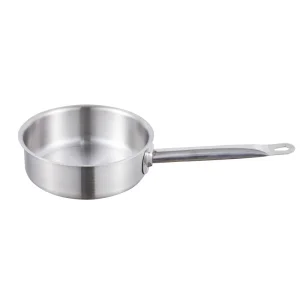
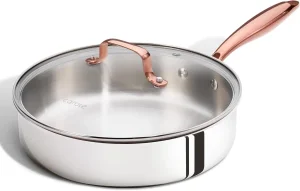
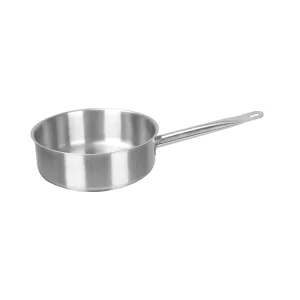
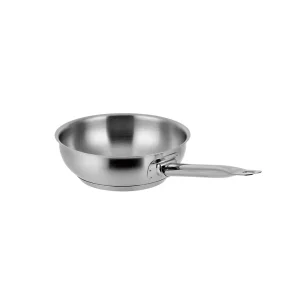
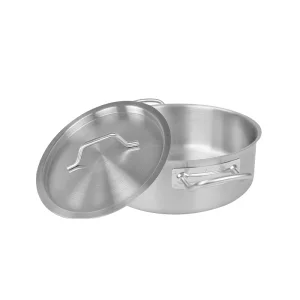
Unlike frying pans with sloped sides, a saute pan is defined by its vertical walls and wide flat base. This shape serves a distinct culinary purpose: it increases the surface area for browning meats and vegetables while holding liquids, making it ideal for braising, poaching, and pan-sauces. High-quality designs incorporate helper handles for heavy lifting, double-riveted connections for maximum mechanical shear resistance, and custom-fit lids to retain steam and energy.
In commercial kitchens, chefs handle pans constantly under high temperatures. Engineering "stay-cool" handles requires implementing a hollow design or a V-shaped junction at the pan interface. This creates a thermal break, significantly reducing heat conduction from the pan body to the chef's hand. High-volume B2B buyers must evaluate these parameters to ensure safety compliance across global hospitality frameworks.
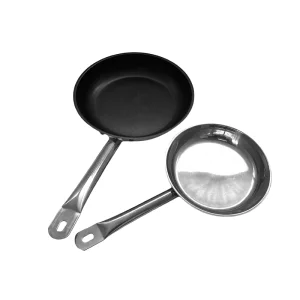
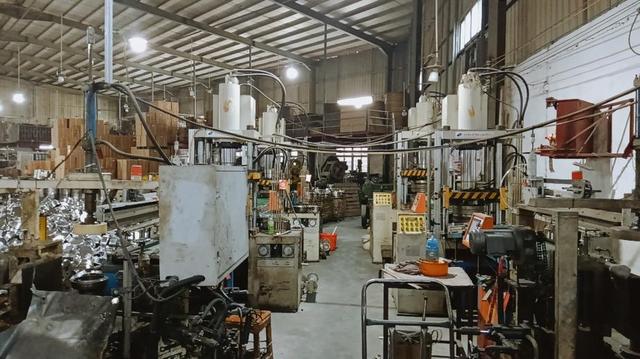
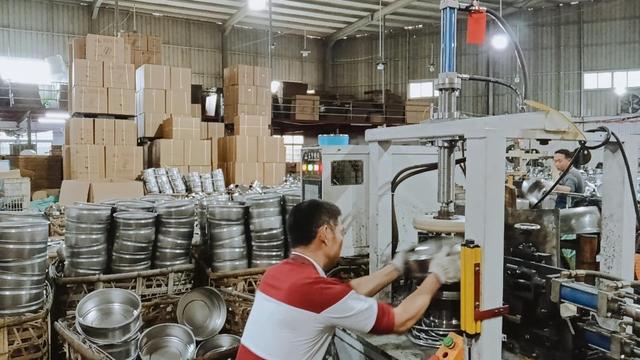
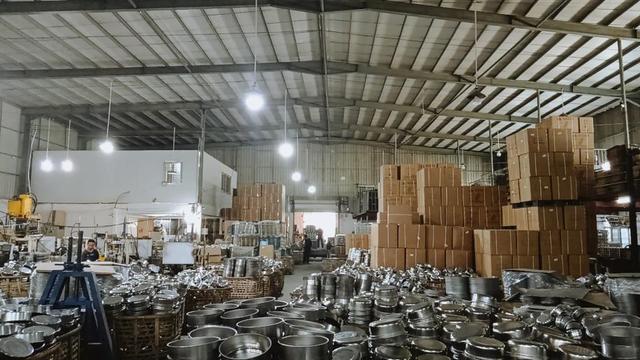
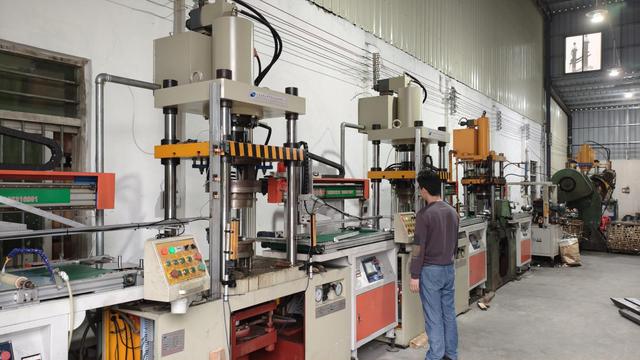
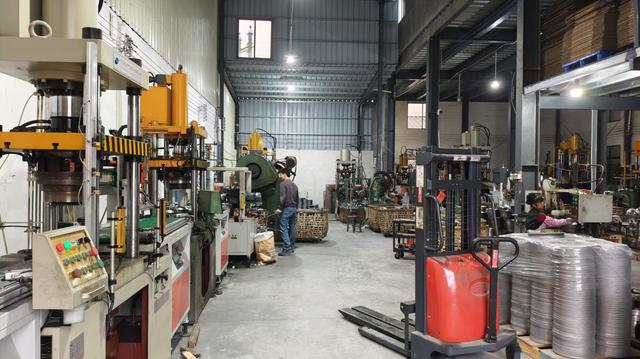
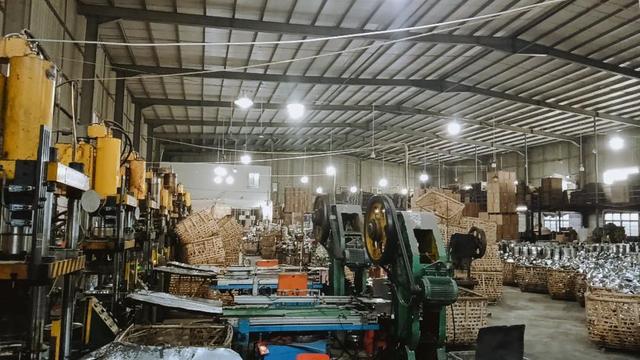
Manual polishing of stainless steel often introduces surface micro-variations that can compromise non-stick properties or aesthetics. Foshan Sarap Kitchen employs multi-axis robotic polishing lines. These automated arms maintain constant pressure and rotation angles, ensuring a flawless mirror-finish or satin-matte finish on every single batch. Heavy-duty hydraulic presses (up to 1600 tons) form the pan body in a single stroke, eliminating structural weak points.
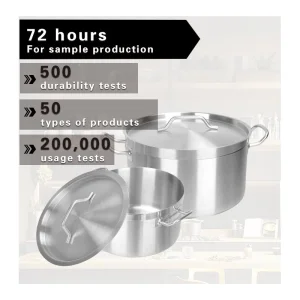
To meet international certifications (FDA, LFGB, NSF), each production run is subjected to rigorous quality-control protocols. This includes spectrometer testing for metal composition verification, salt spray testing to check for corrosion resistance, and thermal shock testing, where pans are heated to 250°C and immediately quenched in cold water to check for layer delamination. This ensures that the multi-ply bonding remains intact under the most severe cooking environments.
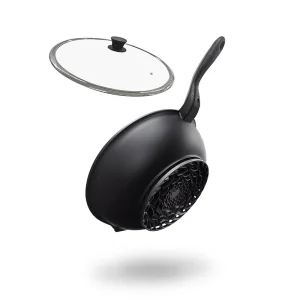
Hospitality groups, retail brands, and industrial kitchens have vastly different requirements. A professional chef might require a heavy-gauge 18/10 stainless steel construction with helper handles, while a consumer brand may prioritize light-weight, honeycomb laser-etched patterns for oil-free cooking. Offering complete design flexibility, including custom handle materials, private-label branding, customized packaging, and optimized induction-base sizing, Sarap Kitchen ensures brand differentiation in a crowded market.
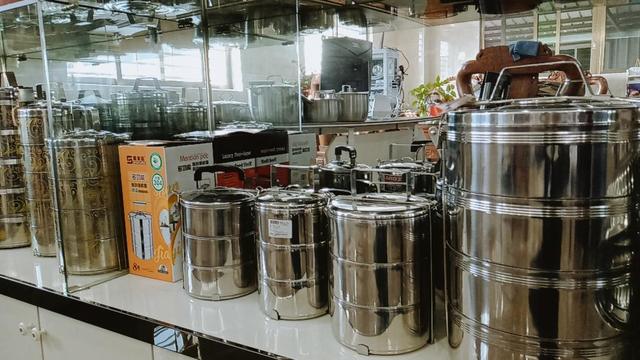
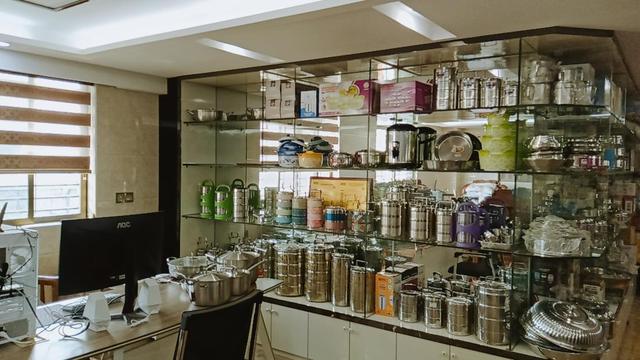
Commercial kitchens operate under extreme pressure. Equipment is subjected to constant heating, mechanical scratching, and aggressive washing cycles. Buyers for hotels, fine-dining establishments, and catering groups prioritize heavy-gauge 18/10 stainless steel saute pans with double-riveted handles. These pans must be fully induction-compatible and have chemical resistance against industrial dishwashing detergents.
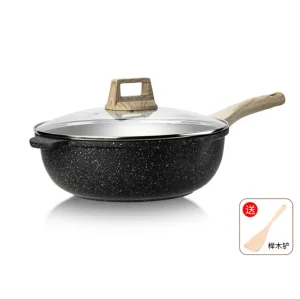
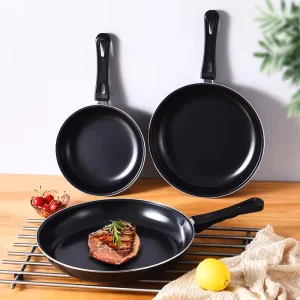
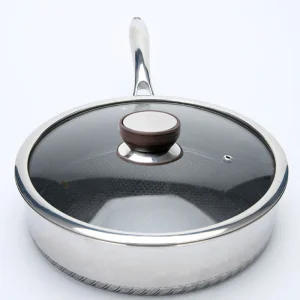
Consumer brands require eye-catching aesthetics combined with reliable performance. Non-stick coatings, ceramic glazing, laser-etched honeycomb patterns, and glass-tempered lids are highly sought after in this sector. Our factory supports customization in handle finishes (e.g., silicone wraps, gold plating, rose-gold titanium plating) and laser-engraving brand logos to match distinct brand identities.
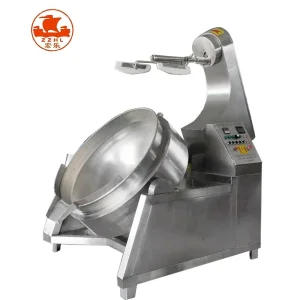
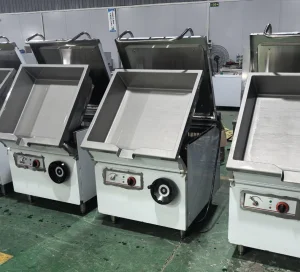
For food manufacturing facilities and institutional kitchens (e.g., hospitals, military bases), large-scale gas tilting braising pans and planetary stir cooking systems are standard. These machines demand heavy-wall structural stainless steel (SUS304 or SUS316) to ensure consistent thermal distribution and resist wear from mechanical agitators. We manufacture customized commercial-grade systems to meet these heavy-duty requirements.
| Cookware Type / Material | Thermal Conductivity | Durability & Longevity | Acid/Alkali Resistance | Maintenance Level |
|---|---|---|---|---|
| Single-Ply Stainless Steel | Low (leads to hotspots) | High | Excellent | Very Low |
| Tri-Ply (3-Ply) Clad Steel | Excellent (uniform distribution) | Extremely High | Excellent | Very Low |
| Cast Iron / Carbon Steel | Medium (slow to heat) | Extremely High | Poor (reactive to acidic food) | High (requires seasoning) |
| Anodized Aluminum | Very High | Medium | Medium (degrades with alkaline chemicals) | Medium |
For professional operations, tri-ply stainless steel represents the gold standard. In tri-ply structures, the outer layer is made of magnetic stainless steel (typically SUS430), enabling use on high-efficiency induction cooktops. The core is high-grade aluminum, which acts as a thermal engine to quickly distribute heat throughout the vessel. The cooking surface is 18/10 stainless steel (SUS304), which does not react with acidic foods (such as tomatoes or wine-based reductions), preventing metallic off-flavors and ensuring chemical safety.