How to Identify High Quality Stainless Steel Cookware?

Time:2026-09-15 Author:Henry
0%

Learning how to identify high quality stainless steel cookware begins with looking beyond a polished surface. The pan should feel balanced, sit flat, and show clean, even construction around its rim. Grand View Research’s Stainless Steel Cookware Market Analysis, 2024–2030, identifies durability, corrosion resistance, and compatibility with modern cooktops as important market drivers. These factors matter in a real kitchen, where a saucepan may face daily boiling, simmering, and sudden temperature changes.

Material composition deserves close attention. Many reliable manufacturers use 18/10 stainless steel, meaning approximately 18% chromium and 10% nickel. Chromium supports corrosion resistance, while nickel improves shine and stability. However, the label alone proves very little. A thick aluminum or copper core usually spreads heat more effectively than stainless steel alone. As Harold McGee writes in On Food and Cooking, “Stainless steel is a poor conductor of heat.” That simple sentence explains why bonded, multilayer construction matters.

Look closely at the details. Handles should feel secure, rivets should be smooth, and lids should sit without excessive wobbling. A magnet test may reveal a magnetic outer layer, but it cannot confirm overall quality. I once trusted a heavy, mirror-finished pan too quickly. It looked impressive, yet its base heated unevenly. That was a useful mistake. This guide will examine steel grades, layered bases, workmanship, heat response, safety information, and manufacturer testing. The goal is practical judgment, not expensive branding. Reliable cookware should perform consistently before it looks beautiful.
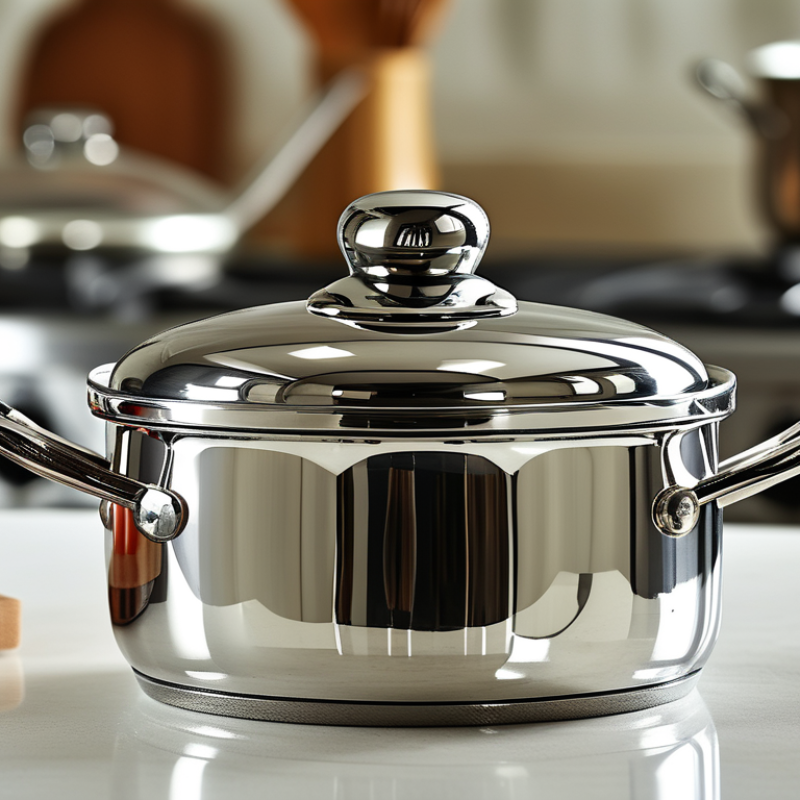
How to Identify High Quality Stainless Steel Cookware?

Understand Stainless Steel Grades and Their Cooking Performance

How to Identify High Quality Stainless Steel Cookware?

Stainless steel grade strongly influences cooking performance, durability, and maintenance. Grade 304 usually contains about 18% chromium and 8–10.5% nickel, according to ASTM A240 composition ranges. Chromium supports corrosion resistance, while nickel improves toughness and stability during heating. Grade 316 adds molybdenum, commonly 2–3%, for stronger resistance to salt and acidic foods. It is excellent, but often unnecessary for ordinary home cooking.

Grade 430 contains roughly 16–18% chromium and little or no nickel. ASM Handbook thermal data places its conductivity near 26 W/m·K, compared with about 16 W/m·K for 304. That difference can make 430 respond slightly faster, but it does not guarantee even heating. In practice, a thick aluminum or copper core matters more. A thin pan may still create a dark hotspot under a tomato sauce. World Stainless reported approximately 58.4 million tonnes of global crude stainless steel production in 2023, yet production volume does not prove cookware quality. Construction still needs inspection.

Tips: Look for the grade marking, a substantial base, smooth welds, and a flat cooking surface. A magnet test can help identify some ferritic steel, but it cannot confirm quality. I once trusted a heavy pan too quickly; its base warped after repeated high heat. That mistake is worth remembering. Use moderate heat, preheat gradually, and check the manufacturer’s specifications before buying.

How to Identify High Quality Stainless Steel Cookware?

Stainless steel grade strongly affects cookware durability, corrosion resistance, induction compatibility, and heat response. The chart compares representative chromium and nickel content with thermal conductivity at approximately 20°C.

304 stainless steel is a common high-quality choice for general cookware, while 316 offers enhanced corrosion resistance because of its molybdenum content. 430 is magnetic and induction-compatible, with higher thermal conductivity but lower nickel content. 410 is hard and durable but generally less corrosion-resistant than 304 and 316. Values are representative composition and room-temperature material-property figures; exact values vary by specification and product construction.

Examine Construction, Thickness, and Heat Distribution

When I inspect stainless steel cookware, I check construction before appearance. A heavy pan is not automatically better. Look for a firmly bonded aluminum or copper core beneath the cooking surface. Stainless steel conducts heat poorly; NIST reference data places common austenitic stainless grades near 14–16 W/m·K at room temperature. Aluminum conducts roughly 200 W/m·K. This difference explains why quality cookware usually uses layered construction.

Thickness matters, but uniformity matters more. ASTM A240/A240M defines requirements for stainless steel plate, sheet, and strip, including chemical composition and dimensional tolerances. A thick base can store heat, yet an uneven base may create hot rings under the center. I place the pan on a flat surface and check for rocking. Tiny movement matters. The cooking surface should also feel smooth, without sharp seams or visible gaps around the bonded base. These details reveal manufacturing control better than polished packaging.

Heat distribution needs a practical test. I warm the empty pan briefly, then add a few drops of water. Droplets that glide evenly suggest a consistent surface temperature; one violently evaporating spot signals a local hot zone. The test is imperfect. Pan geometry, burner size, and preheating time can change the result. The U.S. Department of Energy advises matching cookware size to the heating element, which reduces wasted energy and improves contact. I also examine handles and rivets. Loose connections can compromise control, even when the base performs well.

Check the Cookware’s Interior, Exterior, and Finish

High-quality stainless steel cookware should be judged from the inside out. I inspect the cooking surface under bright light, looking for pits, pinholes, rough welds, or uneven polishing. These defects can trap food and complicate cleaning. ISO 15510 defines stainless steel by its chromium content, generally at least 10.5%. However, a chromium number alone cannot prove good cookware performance.

The interior should feel smooth, not glassy or suspiciously mirror-like. Excessive polishing may hide small flaws. I also check whether the base sits flat on a cool counter. A visible gap can create uneven heating. ASTM A240/A240M covers stainless steel plate and sheet requirements, but cookware still needs careful forming and bonding. Standards matter. They do not replace inspection.

The exterior deserves equal attention. Look for consistent brushing, tight seams, and a firmly attached base without dark gaps. The handle connection should feel stable, with no sharp edges or rattling parts. The International Stainless Steel Forum reported about 58.4 million tonnes of stainless steel production in 2023, showing the scale of this material industry, not automatic quality. “18/10” sounds reassuring, yet it describes nominal composition rather than thickness, flatness, or finishing accuracy. I have judged pans too quickly by their shine. That was a mistake. A less reflective surface may be better made. Check the details you can touch.

Evaluate Handles, Lids, Weight, and Overall Usability

How to Identify High Quality Stainless Steel Cookware?

Evaluate Handles, Lids, Weight, and Overall Usability

A well-made stainless steel pan should feel secure before it reaches the stove. Hold the handle with one hand and gently shake the pan. It should not wobble, twist, or feel loosely attached. Stay-cool handles are useful, but always check their heat limits. A lid should sit evenly and move without scraping. A small steam vent can reduce pressure, although it may release more moisture than expected.

Weight also offers clues, but it can mislead you. A very heavy pan may retain heat well, yet become tiring during daily cooking. I once preferred the heaviest option and later noticed wrist strain while preparing soup. A balanced pan feels stable without demanding extra effort. Check whether the base sits flat on your cooktop. Try lifting it with food inside, if possible. That test reveals more than appearance.

Tips: Inspect the handle joints for smooth finishing and exposed gaps. Place the lid on the pan and rotate it gently. Listen for rattling. Test the pouring rim with water, because a sharp edge can create messy drips. Consider storage space, dishwasher instructions, and your usual recipes. A pan can look excellent but still frustrate you every evening. My judgment is not perfect, so practical testing should outweigh polished photographs.

Verify Safety Standards, Durability, and Manufacturer Reliability

How to Identify High Quality Stainless Steel Cookware

High quality cookware should meet recognized food-contact safety standards in its target market. Ask for compliance documents, material specifications, and independent test reports. A vague “food safe” claim is not enough. Check whether the manufacturer provides batch traceability and clear contact information. Reliable suppliers explain their testing process without hiding behind technical language. Packaging should also show care, with accurate instructions and warnings.

Durability appears in practical details. Look for even walls, secure handles, smooth rims, and flat bases. A heavy pan is not automatically better. Excess weight may indicate poor balance instead of stronger construction. Inspect welds and rivets closely. They should feel stable, not sharp or loose. Stainless steel grade markings can help, but they do not replace performance testing. I once focused too much on a polished finish. It looked impressive, but the base warped after repeated heating. Appearance can mislead.

Tips: Tap the base gently and check for movement on a flat surface. Read the warranty terms, not only the headline. Contact customer service with one technical question. A dependable manufacturer should answer clearly and consistently. Also, compare care instructions with your cooking habits. If the guidance seems unrealistic, reconsider the purchase.

FAQS

Which stainless steel grade is suitable for everyday cooking?

Grade 304 suits most home kitchens. It usually contains about 18% chromium and 8–10.5% nickel. It resists corrosion and handles ordinary heating well.

Is grade 316 always better than grade 304?

Not always. Grade 316 includes molybdenum, improving resistance to salt and acidic foods. It may be unnecessary for routine cooking and usually costs more.

What makes grade 430 different?

Grade 430 contains little or no nickel. It can respond slightly faster because it conducts heat better than grade 304. Heat distribution still depends more on the pan’s construction.

Does a heavy stainless steel pan guarantee high quality?

No. Weight alone proves little. A heavy pan may still warp after repeated high heat. Check its flatness and bonded base.

Why is an aluminum or copper core important?

Stainless steel conducts heat poorly. Aluminum or copper spreads heat more effectively beneath the cooking surface. This reduces dark hotspots under foods such as tomato sauce.

How can I check whether a pan sits evenly?

Place it on a flat counter and gently press the rim. If it rocks, the base may be warped. Tiny movement matters.

Can a magnet test confirm cookware quality?

No. A magnet may identify some ferritic steel, including certain grade 430 cookware. It cannot confirm thickness, bonding, or even heating.

What surface defects should I inspect before buying?

Look for pits, pinholes, rough welds, sharp seams, and gaps around the base. These areas can trap food and make cleaning harder.

How can I perform a simple heat-distribution test?

Warm the empty pan briefly, then add several water drops. Evenly gliding droplets suggest consistent heating. The test is imperfect.

Does a shiny finish mean better cookware?

Not necessarily. Excessive polishing can hide small flaws. A less reflective surface may have better finishing accuracy and stronger construction.

Conclusion

Learning how to identify high quality stainless steel cookware starts with understanding stainless steel grades and how they affect cooking performance, corrosion resistance, and durability. A reliable piece should have solid construction, suitable thickness, and a well-designed base that distributes heat evenly and reduces hot spots. Its interior should be smooth and easy to clean, while the exterior and finish should appear consistent, polished, and free from visible defects.

You should also evaluate the cookware’s handles, lids, weight, and overall balance. Secure, comfortable handles and properly fitting lids improve safety and everyday usability, while reasonable weight often indicates stronger construction without making the pan difficult to handle. Finally, check whether the cookware meets recognized safety standards, is built for long-term use, and comes from a manufacturer that provides clear product information and dependable customer support. These factors together can help you confidently determine how to identify high quality stainless steel cookware.

Henry

Henry

Henry is a dedicated marketing professional with a profound expertise in the company's offerings. With years of experience in the industry, he possesses an impressive understanding of the market dynamics and consumer behaviors that drive success. Henry is committed to sharing his insights through......