Why does food stick to stainless steel cookware? The short answer involves heat, moisture, and surface contact—not a defective pan. Stainless steel is durable, but it does not have a naturally slick coating. The British Stainless Steel Association describes stainless steel as an iron-based alloy containing at least 10.5% chromium, a detail that explains its corrosion resistance, not nonstick performance. It is not magic.
In a cool pan, proteins in fish, eggs, or meat can bond with the metal before their surfaces set. Water released from the food can also cool the cooking surface and encourage sticking. As the food heats, its proteins firm up; a properly heated pan and a thin layer of oil can help it release. The USDA’s food-safety guidance focuses on safe internal temperatures, not pan adhesion, so temperature alone cannot guarantee a clean flip. Technique matters, too.
A practical check is simple: preheat the pan, add a little oil, then wait for it to shimmer before adding dry food. If a fillet resists when you nudge it, give it more time instead of scraping. That small pause often helps. Still, pan thickness, burner strength, and food moisture vary, so one timing rule will not suit every kitchen. Understanding these factors makes sticking less mysterious—and easier to troubleshoot.
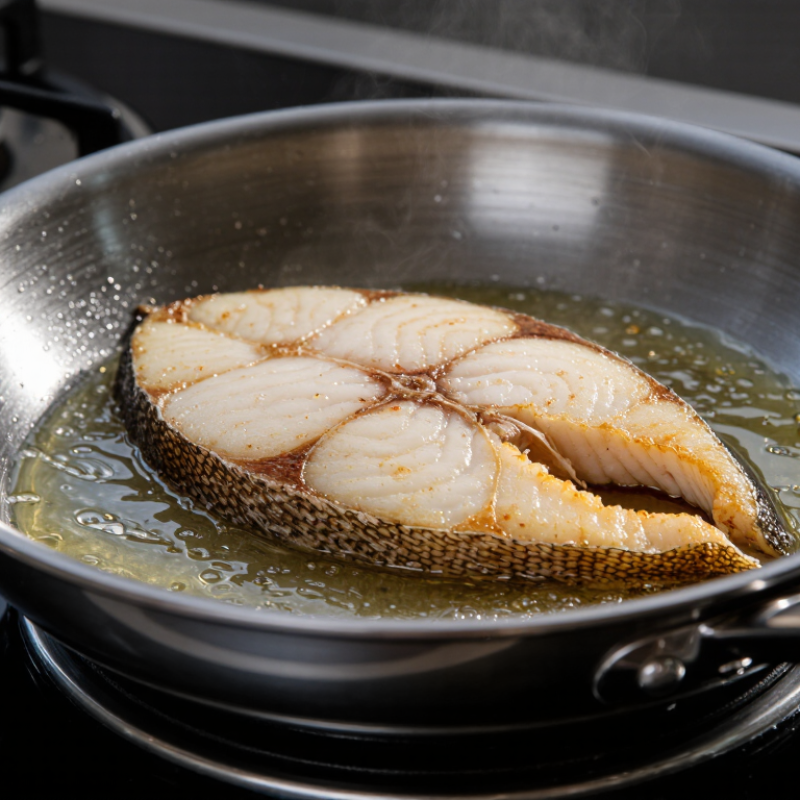
Stainless steel can release food cleanly, but it is not naturally nonstick. Eggs and fish often cling when proteins meet a cool or unevenly heated surface. A practical test: warm the pan, add a little oil, then place in a dry piece of food. If it resists, give it time; proteins often release after browning. I still sometimes rush this step.
The alloy matters. ASTM A240/A240M specifies Type 304 with at least 18% chromium and 8% nickel, with permitted ranges above those minimums. Chromium supports corrosion resistance, while nickel helps stabilize the steel’s structure. Neither element creates a slick coating. ASM International’s engineering property tables put 304’s thermal conductivity at roughly 16 W/m·K near room temperature. That is modest compared with aluminum, so a single-layer pan may heat less evenly.
That number is easy to misread. A pan’s thickness and construction also shape its heating; bonded aluminum or copper layers can spread heat more effectively. Hot spots can make one patch of food seize while another remains pale. Use medium heat, let the pan preheat, and avoid crowding it. Small details matter. Even then, sticky food can happen, and the exact release point takes practice.
Why Does Food Stick to Stainless Steel Cookware?
How Low Thermal Conductivity Can Create Uneven Pan Temperatures
Stainless steel conducts heat much less readily than aluminum or copper. ASM Handbook materials tables place common stainless steels near 15–20 W/m·K, compared with roughly 200 for aluminum and 390 for copper. These are approximate room-temperature values; alloy and temperature matter. In a thin, single-layer pan, heat may spread slowly from the burner’s contact area. One patch gets hot while the surface nearby stays cooler. Hot spots form.
That unevenness can affect food before you notice it. A chicken strip may brown over the burner ring while its edge turns pale. Egg proteins can bond to a cooler, insufficiently heated surface, especially if the pan is dry or the food is damp. The result? Sticking. Many stainless pans use bonded aluminum or copper layers to spread heat more evenly, but the burner still matters. A small flame beneath a wide pan can leave the outer surface cooler.
Preheating helps, though it is not a cure for every pan or stove. I’d warm the pan gradually, then test it with a few drops of water: they should bead and glide, not vanish instantly. Add oil, let it shimmer, and dry food before it goes in. This test is imperfect; droplet behavior can mislead, and a pan’s construction changes its response. The thermal-conductivity figures describe materials, not a guarantee of how a finished pan heats.
Egg can cling to stainless steel before it has time to set. The key detail is protein temperature: some egg-white proteins begin unfolding and coagulating at about 62–65°C. This is a range, not a precise switch. A thin smear of white touching a cooler patch of steel may spread and grip before the rest firms up.
Watch the pan, not just the dial. A drop of water should bead and glide across a properly heated surface, though this test is imperfect and can vary with the pan. Lower the heat, add a little oil or butter, then give it a moment to coat the cooking area. No rushing. If the fat smokes, the pan is probably hotter than needed. Crack in the egg and leave it still; moving it too early can tear the setting white and expose fresh protein to the steel.
The edge usually firms before the center. That contrast is useful: wait until the white turns opaque around the yolk, then ease a thin spatula underneath. I sometimes expect the egg to release sooner than it does. A brief pause often works better than scraping, though pan temperature and egg freshness can change the result.
| Factor | Relevant Condition | Why Food May Stick | Practical Approach |
|---|---|---|---|
| Egg-white proteins setting | About 62–65°C (144–149°F) | As egg-white proteins unfold and coagulate, they can attach to microscopic irregularities in the steel surface, especially before a stable layer of fat forms between the food and pan. | Preheat the pan moderately, add cooking fat, then add the egg. Let the white begin to set before trying to move it. |
| Protein-rich foods | Eggs, fish, poultry, and meat are especially prone to sticking during early cooking. | Moist proteins can make close contact with the pan. Initial adhesion often decreases as the food cooks, firms, and releases moisture. | Pat food dry when appropriate, avoid crowding, and allow a seared surface to develop before turning. |
| Pan temperature | There is no single ideal surface temperature for every food, pan, or cooking fat. | A pan that is too cool may prolong contact while proteins set; excessive heat can cause rapid browning or burning and make food harder to manage. | Use medium or medium-low heat for delicate foods such as eggs. Adjust the heat to the recipe and the food’s thickness. |
| Cooking fat | Add oil or butter after preheating and before adding food. | A thin layer of fat helps reduce direct contact between food and steel, but it does not prevent sticking if the pan is overheated, dry, or disturbed too soon. | Use enough fat to lightly coat the cooking area. For butter, moderate heat helps limit scorching. |
| Moisture on the food | Surface moisture varies with rinsing, thawing, marinades, and natural juices. | Water can interfere with browning and may cause food to steam. Released liquid can also cool the pan and prolong cooking. | Blot foods dry when suitable, and cook in batches so the pan is not overcrowded. |
| Moving food too early | Most common during the first moments of cooking. | Turning or scraping before the surface firms can tear the food and leave protein residue on the pan. | Wait until the food releases more readily with a gentle nudge. Use a thin, suitable spatula rather than forcing it. |
| Pan surface and cleanliness | Food residue, scratches, and surface condition can affect contact and cleanup. | Cooked-on residue can create uneven hot spots or provide places for fresh food to catch. | Start with a clean pan, use utensils appropriate for stainless steel, and remove residue after cooking. |
Food often sticks to stainless steel because raw proteins bond with the metal before they firm up. Preheating changes that first contact. As the pan warms, its surface expands slightly, and moisture or residue can evaporate. The cooking surface becomes more even, though it is not truly nonstick.
A practical cue is a small drop of water. On a properly heated pan, it may bead and glide instead of flattening immediately. This test is imperfect; pan shape, heat level, and drop size all affect what you see. Dry the pan, add a thin layer of oil, then wait until it shimmers gently. Not smoking. Lower the heat if the oil smokes.
Place dry food into the pan and give it room. A damp chicken cutlet can cool the surface and release steam, while crowded pieces trap moisture. At first, the food may resist when you try to lift it. Wait a little. As the surface browns and proteins set, the food often releases more easily. A thin spatula can help, but scraping too soon may tear the crust. Heat varies between stoves, so timing takes some adjustment—and even a well-preheated pan can surprise you.
Stainless steel is not naturally nonstick. Moisture on food can cool the pan and encourage proteins or starches to grip the surface. Pat meat, fish, tofu, or sliced vegetables dry with a clean towel before cooking. Less surface water means better browning, too.
Dry food matters.
Give the pan time to preheat over medium heat; a rushed, overheated pan can cause trouble. Add a thin layer of oil once the pan is warm, then wait until it shimmers gently. If it smokes, lower the heat.
Lay the food down carefully and leave space between pieces, so they sear instead of steam. Now wait. At first, a fillet or chicken piece may feel stuck when nudged. As its surface browns, it often releases more easily. Forcing it early can tear the crust.
That said, timing is not exact: pan thickness, burner strength, and food size all matter. I still find it tempting to move food too soon; watching for an easy release is a better cue than counting seconds.
When cooking another batch, wipe away dark residue and add fresh oil if needed.
Some egg-white proteins begin unfolding and coagulating around 62–65°C. It is a range, not a precise switch.
A small water drop may bead and glide across the surface. Not a perfect test. Pan shape, heat, and drop size can change what you see.
Preheat the dry pan, lower the heat, then add a thin layer of oil or butter. Wait until it shimmers gently. If it smokes, lower the heat.
Raw egg proteins can grip the metal before they set. A thin smear of white may stick while the rest is still runny.
Leave it still at first. Wait until the white turns opaque around the yolk, then try a thin spatula. I sometimes try too soon.
As the surface browns and proteins set, food often releases more readily. Give it time. Scraping early can tear the crust.
Yes. A damp cutlet can cool the surface and release steam. Pat food dry when practical, and leave space between pieces.
No. Preheating can make the surface more even, but it does not make the pan truly nonstick. Results still vary.
Why does food stick to stainless steel cookware? The answer involves both the pan’s heat behavior and the way food changes as it cooks. Stainless steel 304 typically contains 18% chromium and 8% nickel, and its thermal conductivity is about 16 W/m·K. Because it does not spread heat as quickly as some other materials, a pan can develop hotter and cooler areas if it is heated unevenly. Food placed on a cool or inconsistently heated surface may cling before it begins to cook properly.
Preheating helps create more consistent contact between the food and the pan, while drying ingredients reduces excess moisture that can interfere with browning. Protein-rich foods such as eggs are especially prone to sticking: egg-white proteins begin to set at around 62–65°C, and they can attach to the surface if added before the pan is ready. A suitable amount of oil and patience also matter. Letting food cook until it naturally releases, rather than moving it too soon, can help prevent sticking and encourage even browning.
