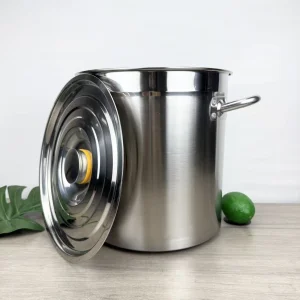
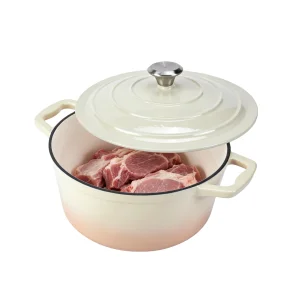
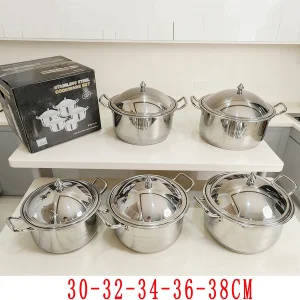
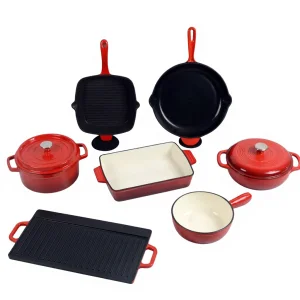
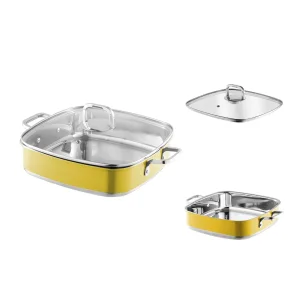
CE Certified Stainless Steel Mixing Tools Exporter & Exporters

High-Performance, Multi-Ply Engineering, and Compliant Culinary Systems for Global Enterprise Procurement

Whitepaper Briefing

High-Spec Stainless Steel Mixing Tools in Commercial Kitchen Architecture

In modern high-throughput commercial culinary preparation and large-scale catering environments, mixing and cooking vessels represent critical nodes where material integrity directly intersects with process reliability. High-alloy food-grade stainless steels—most notably 304 (18/8) and 316 (18/10) grades—serve as the industry standard. Their thermal properties, mechanical tensile strength, and superior chemical passivation layers remain essential under extreme chemical, thermal, and mechanical stresses.

For B2B procurement officers, distributors, and kitchen equipment engineers, identifying partners who act as a verified CE Certified Stainless Steel Mixing Tools Exporter is crucial. CE certification confirms compliance with stringent European Union directives, specifically Regulation (EC) No 1935/2004 on food contact materials and Directive 2011/65/EU (RoHS). These standards verify that heavy metal extraction levels (nickel, chromium, manganese) remain well below dangerous limits under acidic, basic, and high-temperature conditions.

2011 Established
22k+ m² Factory Area
250+ Skilled Workforce
100% CE Compliant
Engineering & Materials

Metallurgy and Thermal Mechanics of Professional Cookware

Exploring structural composite variations, surface finishes, and heat transfer efficiency across modern professional applications.

Premium Alloy Engineering

We build our commercial cookware systems around specific metallurgical grades designed for durability and food safety:

SUS304 (18/8 Stainless): Outstanding pitting and crevice corrosion resistance under exposure to salt and organic acids.
SUS316L (18/10 Marine Grade): Optimized for extreme environments and industrial processing with higher molybdenum content to prevent chlorine-induced degradation.

Tri-Ply Thermal Composites

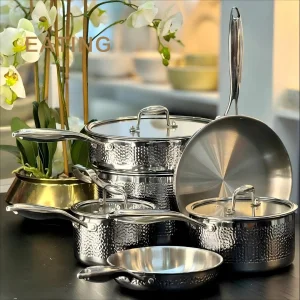
Single-sheet stainless steel exhibits poor thermal conductivity. Our high-performance mixing tools and pans utilize clad composite sheets:

Core Cladding: An encapsulated 99.5% pure aluminum core guarantees rapid, multi-directional heat distribution.
External Shell: Magnetic induction-compatible ferritic stainless steel (such as Grade 430) ensures compatibility with high-efficiency commercial induction ranges.

Micro-Structured Finishes

We deploy advanced surface engineering techniques to improve physical release characteristics and durability:

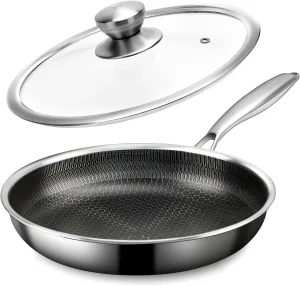
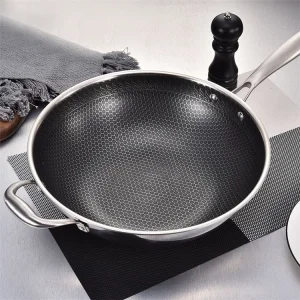
Laser Honeycomb Texturing: Creates raised stainless steel micro-structures that protect PVD non-stick coatings from abrasion by metal utensils.
Industrial Passivation: Electropolishing seals surface micro-pores, preventing microbial colonization and ensuring clean-in-place (CIP) efficiency.
Performance Attribute Monolithic SUS304 Tri-Ply Clad Composite Enameled Heavy Cast Iron Carbon Steel (Protected)
Thermal Conductivity 16.2 W/m·K (Low) 145 W/m·K (High / Al-Core) 50 W/m·K (Moderate) 54 W/m·K (Moderate)
Acid Resistance (pH < 4.0) Excellent Excellent Excellent (Enameled Only) Poor (High Corrosion Risk)
Induction Compatibility Non-Magnetic (Generally No) Yes (SUS430 Outer Clad) Yes Yes
Tensile Strength (Yield Point) ≥ 205 MPa ≥ 310 MPa (Clad Interface) ≥ 150 MPa ≥ 280 MPa
Manufacturing Infrastructure

Foshan Sarap Kitchen Co., Ltd.

A precision manufacturing hub engineered to support global supply chains with consistent quality, scale, and technical compliance.

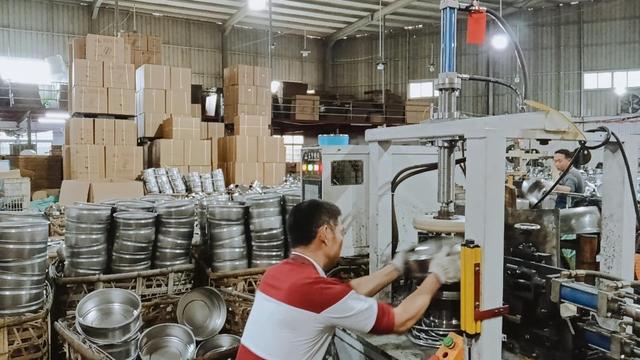
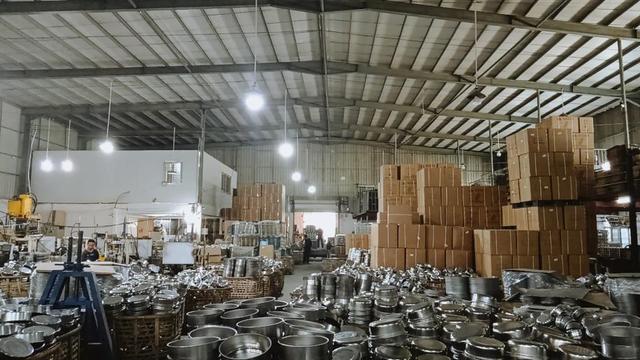
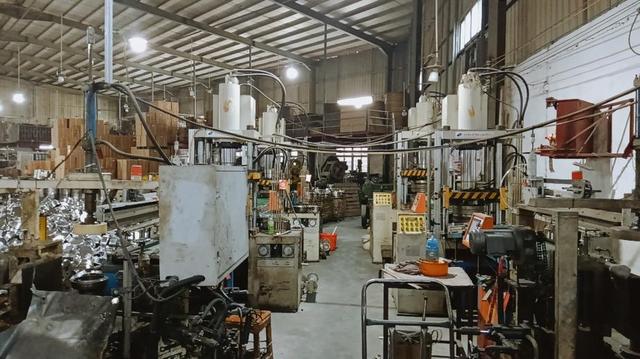
Established in 2011 in Foshan, Guangdong Province—a leading hub for stainless steel metallurgy and manufacturing—Foshan Sarap Kitchen Co., Ltd. operates a facility covering over 22,000 square meters. Guided by an experienced engineering and management team, our facility features 250+ skilled workers operating specialized machinery designed to manufacture high-durability B2B cookware.

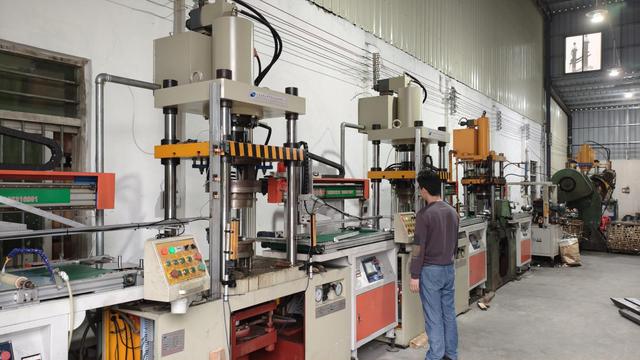
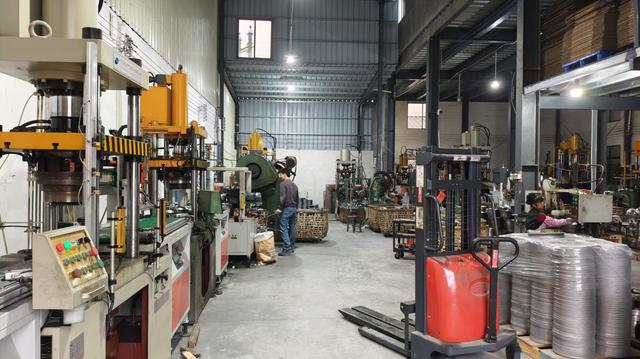
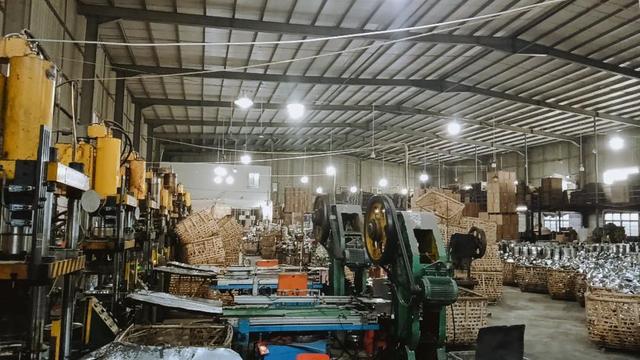
Our facility runs automated polishing lines, hydraulic deep-drawing presses, automated robotic welding stations for secure handle attachment, and multi-stage ultrasonic cleaning systems. These production lines support flexible, high-volume production for cookware and mixing tools, maintaining a low defect rate and fast cycle times.

By using direct sourcing for premium raw steel coils and maintaining ISO-compliant quality gates, we help our partners optimize their margins while mitigating global supply chain risks. We deliver reliable OEM and ODM services that match the strict procurement standards of global brands, hotel suppliers, and retail distributors.
OEM/ODM Customization Tailor-made adjustments for physical handle geometries, wall thicknesses, and raw material alloys to match your exact regional market demands.
ISO 9001 Integration Our quality control team supervises every step, from spectral raw material verification to final high-pressure stress and drop tests.
Rapid Prototyping Our industrial design department uses 3D CAD modeling and finite element thermal analysis to move concepts to physical prototypes quickly.
Global Export Scope Experienced export logistics support shipping directly to North America, Europe, the Middle East, Southeast Asia, and South America.

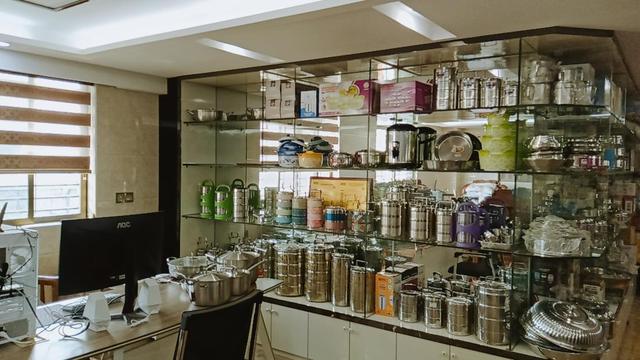
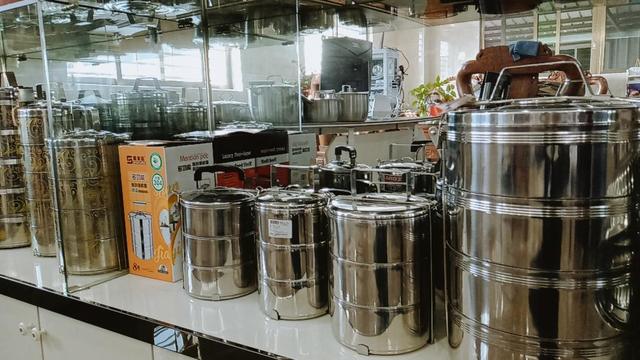
Foshan Sarap Kitchen Facility & Production Views

Operational Performance

Macro-Industrial Solutions for Modern Kitchens

Designing tools for high-temperature durability, structural stability, and hygienic standards in demanding commercial settings.

Joint Integration & Mechanical Strength

Handle failure is a common issue in commercial kitchens. Our products utilize robust joining methods designed for structural longevity:

Multi-Point Spot Resistance Welding: Provides a clean interior surface, eliminating crevice corrosion risks and areas where food particles could collect.
Dual-Rivet Configuration: Uses heavy-duty aerospace-grade rivets to secure handles under high mechanical loads in high-capacity vessels.

Ergonomic Handle Engineering

Proper weight distribution and heat management protect kitchen staff and improve daily operational efficiency:

"Stay-Cool" Geometry: Cast stainless steel handles feature a hollow V-shaped transition zone that limits thermal conduction from the pot body.
Optimized Lever Arms: Handles are angled to reduce forearm fatigue when lifting loaded large-capacity stock pots.

Sanitary & HACCP Compliance

Commercial equipment must facilitate quick, complete sanitation to meet international health regulations:

Flanged Anti-Drip Rims: Curved pouring edges prevent run-down liquid on the exterior walls, keeping the cooking station cleaner.
Laser-Etched Volumetric Scales: Internal capacity markings eliminate the need for secondary measuring tools, helping speed up kitchen workflows.
Compliance & Trade

Export Standards & Supply Chain Resilience

A B2B procurement matrix designed to meet international import standards and logistics requirements.

Global Food Safety Compliance

Our manufacturing and quality assurance frameworks align with major regulatory programs:

CE Certification: Fully verified to meet EU 1935/2004 standards for food contact products, safeguarding imports against customs delays.
FDA & LFGB Alignment: Materials undergo regular chemical extraction tests to verify the absence of toxic elements, plasticizers, and heavy metal residues.

Supply Chain Management

We work to secure and streamline raw material logistics and manufacturing schedules:

Direct Sourcing: By purchasing directly from tier-one domestic steel mills, we protect pricing against metal market fluctuations.
Buffer Stock Agreements: We maintain reserves of key components (such as handles and clad sheets) to shorten lead times for sudden orders.

International Shipping Support

Our team coordinates logistics across ocean, rail, and air freight networks:

Optimized Container Loading: We design custom packaging configurations to maximize container volume utilization and lower per-unit freight costs.
Customs Integration: We prepare all required export documentation (including Certificate of Origin and mill test certificates) to ensure clear customs processing.
Future Horizon

Cookware Technology Roadmap & Market Developments

Analyzing shifts in manufacturing efficiency, materials science, and commercial kitchen demands.

1. Advanced Cladding & Materials

Future cookware design focuses on multi-ply composite configurations that reduce overall weight while maintaining mechanical strength and thermal distribution. The development of high-entropy alloys and advanced cladding processes helps limit thermal warping under repetitive heating cycles.

2. High-Efficiency Induction Adaptations

As commercial kitchens shift away from gas systems, optimizing induction performance is a core focus. We are developing specialized base geometries designed to maintain flat, full contact with induction cooktops, preventing the base deformation that can be caused by thermal expansion differences between multi-layer metals.

3. Carbon Footprint & Material Reuse

We are incorporating PCR (Post-Consumer Recycled) stainless steel alloys into our raw material supply chain. Modern processing technologies maintain the purity and corrosion-resistant properties of these recycled metals, supporting the environmental goals of global buyers.

Procurement Framework

B2B Procurement Matrix for Stainless Steel Mixing Tools

A structured evaluation checklist designed for B2B buyers to verify material quality, mechanical strength, and manufacturing reliability.

Material Verification: Request chemical analysis reports (spectroscopy data) from your suppliers to confirm that carbon, chromium, and nickel concentrations match SUS304 or SUS316 standards. This is essential for preventing corrosion in food-contact environments.
CE Certification Validation: Confirm that the supplier’s declarations of conformity for food contact safety (such as EU 1935/2004 certificates) are issued by accredited third-party testing laboratories (like SGS, TÜV, or Intertek).
Interface Design Analysis: For high-capacity tools, evaluate handle connection designs. Request shear and tensile strength reports for welded or riveted joints to confirm long-term mechanical reliability under load.
Supply Chain Transparency: Verify the supplier's production capacity, automated tooling availability, and raw material sourcing protocols. An established manufacturer with dedicated polishing and drawing lines (like Foshan Sarap Kitchen Co., Ltd.) offers more stable delivery timelines.
Technical Support

Frequently Asked Questions & Technical Insights

Common questions from B2B buyers regarding metal grades, certifications, manufacturing methods, and logistics.

Why is CE Certification necessary for commercial kitchen mixing tools?
CE certification indicates that the product complies with EU health, safety, and environmental protection standards. For food-contact items, it confirms that materials align with Regulation (EC) No 1935/2004, indicating that chemical migration levels under heating and exposure to acids are within safe legal limits. This compliance is essential for products entering the European market and passing local health inspections.
What is the difference between 304 and 316 stainless steel for mixing tools?
Grade 304 contains 18% chromium and 8% nickel, offering solid corrosion resistance for general kitchen tasks. Grade 316 includes 2% to 3% molybdenum, which increases resistance to chlorides (found in salt) and food acids. 316 is generally used for heavy-duty food processing, high-saline recipes, and environments requiring strong chemical sanitizers.
How does a tri-ply construction compare to encapsulated bases?
Tri-ply construction clad sheets run from the base up through the side walls of the vessel, ensuring even heat distribution throughout the entire body to reduce hot spots and scorching during mixing. Encapsulated bases feature an aluminum disc welded only to the bottom of the pot, meaning the side walls remain single-layer stainless steel with limited heat transfer.
What options are available for custom OEM/ODM orders?
We provide full customization, including adjusting handle styles, material wall thickness (from 0.6mm up to 2.5mm), interior and exterior surface finishes, customized brand etching, and tailored packaging. Our design team can also work from technical CAD drawings to develop new custom shapes.
How does Foshan Sarap Kitchen Co., Ltd. manage quality control?
We apply a multi-step quality control protocol: raw materials undergo spectral analysis upon arrival, and intermediate products are checked after deep-drawing and polishing. Finished items are subject to thermal shock tests, handle tension/torque tests, and leak detection checks. Final pre-shipment inspections are conducted according to AQL standards.