Analyzing B2B market metrics, macro hospitality demands, and international compliance architectures.
The global commercial food service industry is undergoing a structural transition. Driven by a robust recovery in international tourism, a surge in corporate event hosting, and the continuous expansion of high-end hotel chains (HoReCa sector), the demand for high-performance catering systems has reached unprecedented heights. At the heart of this operational surge is the commercial buffet server—a complex piece of thermal and structural engineering designed to maintain food quality, display culinary creations, and optimize energy usage over extended operating schedules.
In mature markets across North America and Europe, procurement strategies are shifting from low-cost, short-lifecycle items to durable, thermally efficient, and structurally sound kitchenware. Industry standards, such as NSF/ANSI requirements for sanitation and food contact safety, demand that materials utilized in food warming systems show absolute resistance to localized pitting, galvanic corrosion, and mechanical deformation. To satisfy these stringent criteria, premium OEM/ODM factories utilize refined AISI 304 (18/10) and AISI 316 stainless steel grades, which offer superior durability under continuous thermal cycles.
Information Gain Insight: The cost-benefit ratio of purchasing premium multi-layer clad buffet servers over single-ply variants displays a 42% reduction in energy consumption over a 3-year commercial operating span, alongside a significant decrease in food wastage due to uniform heat distribution.
How cutting-edge thermodynamic designs and metallurgical advances are redefining food preservation.
Industrial buffet servers must operate within strict thermal bounds: holding food above 60°C (140°F) to prevent microbial proliferation while avoiding localized overheating, which degrades food texture, appearance, and nutrient profiles. Traditional chaffing dishes relied on direct flame gel-fuel canisters, presenting safety hazards and uneven thermal transfer. Modern hospitality systems have evolved toward electronic induction-compatible and hydraulic-assist designs.
Multi-ply clad bottoms featuring an aluminum core encapsulated between magnetic stainless steel outer layers and food-safe inner linings. This layout facilitates near-instantaneous heat transfer with uniform thermal coverage.
Engineered roll-top systems utilizing precision-machined mechanical friction clutches. This prevents cover slamming, reduces noise in luxury dining areas, and guarantees smooth operation through 50,000+ open-close cycles.
Physical Vapor Deposition (PVD) gold, rose gold, and champagne finishes. Unlike traditional electroplating, PVD offers molecular-level bonding, ensuring superior hardness, wear resistance, and total food contact safety.
From a metallurgical perspective, commercial food pans and servers must withstand constant contact with acidic and saline food solutions. If low-grade steel is used, high chloride levels in food will result in pitting. Quality B2B manufacturing partners like Foshan Sarap Kitchen Co., Ltd. prioritize certified SUS 304 steel, containing 18% chromium and 10% nickel. Chromium generates a self-healing passive chromium oxide film that seals the metal, while nickel stabilizes the austenitic structure, guaranteeing ductility and high impact resistance.
| Performance Parameters | SUS 304 Buffet Servers | SUS 201 Buffet Servers (Lower Grade) | SUS 316 Premium Servers |
|---|---|---|---|
| Nickel (Ni) Content | 8.0% - 10.5% (High stability) | 3.5% - 5.5% (Susceptible to corrosion) | 10.0% - 14.0% (Ultimate stability) |
| Corrosion Resistance (Saline) | Excellent (Ideal for standard catering) | Poor (Prone to rust in humid/coastal areas) | Outstanding (For marine/outdoor high-saline use) |
| Thermal Cycles (Deformation Risk) | Extremely Low | Medium to High | Negligible |
| Lifetime Estimate | 8 - 12 Years | 1 - 3 Years | 15+ Years |
Unveiling the production systems, automation lines, and logistics infrastructure that support B2B distribution.
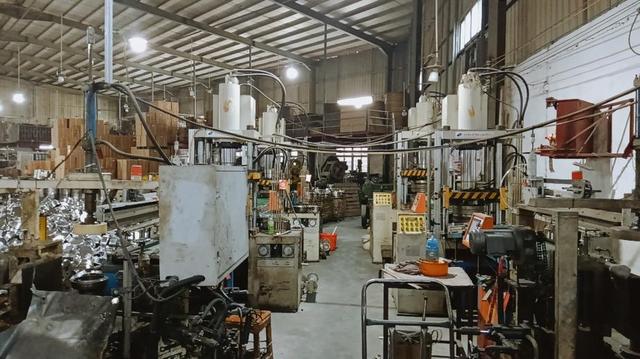
Foshan, located in China's southern Guangdong Province, is one of the world's leading manufacturing hubs for kitchenware and household products. By integrating advanced production equipment with digital quality-assurance systems, local factories have transitioned from traditional manufacturing shops into highly automated Industry 4.0 facilities. This transition is essential for global buyers who require large-volume consistency, minimized lead times, and compliance with international standards.
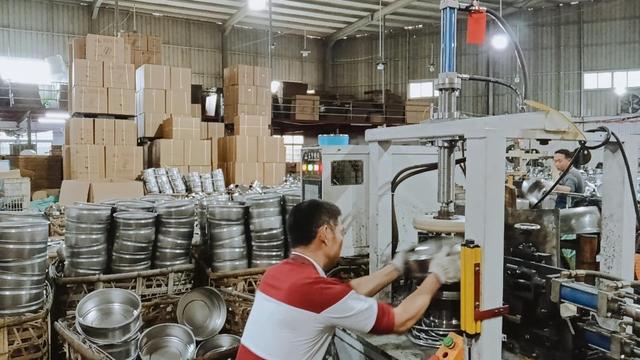
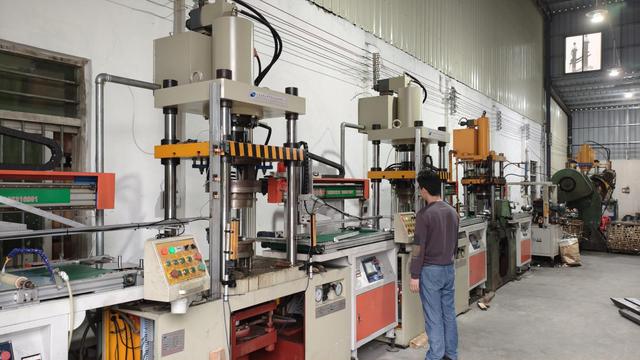
Advanced high-tonnage hydraulic deep-drawing presses shape buffet pan bodies from single metal blanks, maintaining consistent wall thickness, eliminating structural micro-cracking, and ensuring longevity.
Multi-axis automated polishing arms buff metal surfaces to a mirror finish, meeting high aesthetic standards while removing micro-crevices where bacteria could pool.
Through visual sensor technology, each finished buffet cover and base undergoes optical defect detection. This verifies structural dimensions and surface quality to maintain a stable export-pass rate of 99.8%.
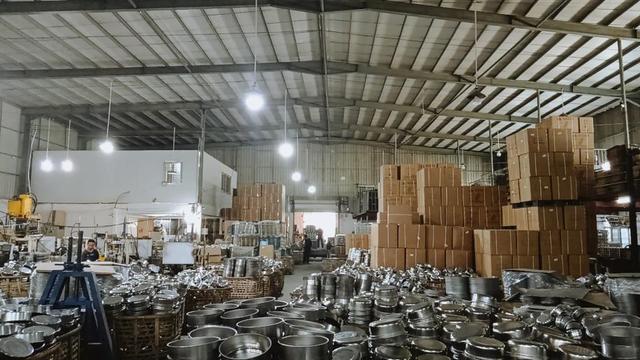
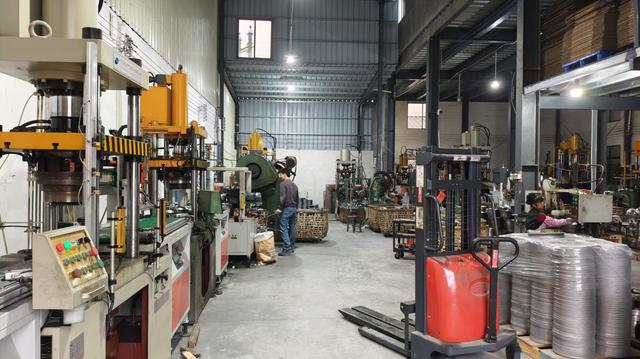
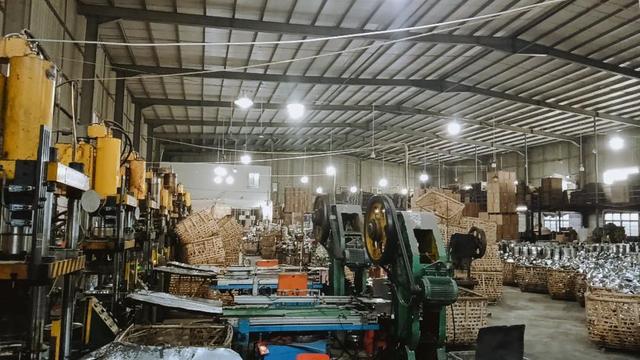
Foshan Sarap Kitchen Co., Ltd. serves as an excellent case study of this regional industrial infrastructure. Spread across a production facility covering over 22,000 square meters and powered by a workforce of more than 250 employees, Sarap Kitchen integrates comprehensive capabilities in cookware design, manufacturing, quality control, and international export services. By maintaining an in-house tooling division, the company can design, construct, and calibrate custom molds, reducing custom tooling turnaround times from months to weeks.
A B2B handbook for custom branding, structural modification, and component detailing.
Procurement departments sourcing for hospitality groups, kitchenware brands, or wholesale distribution networks require adaptable OEM/ODM manufacturing services. The ability to modify product specifications, raw materials, handle geometry, and finishing styles ensures products can be tailored to the demands of specific local target markets.
When engineering custom buffet server projects, several variables must be configured with your factory partner:
Options range from cast stainless steel, brass, or zinc-alloy handles to cool-touch ergonomic silicone profiles. These can be custom-molded to match the customer's design language and brand signature.
Lids can be configured as solid mirror-polished stainless steel, fully tempered clear glass inserts, or double-walled designs that minimize heat radiation loss and steam buildup.
Branding options include laser etching, mechanical stamping, high-pressure die-stamping, and custom color-matched outer decals. In addition, packaging can be customized for either retail or industrial B2B distribution.
Furthermore, structural configurations of buffet warming systems should align with the electrical architectures of the destination market. For instance, European and Middle Eastern layouts operate on 220V-240V grids and require CE/GS certification, while North American markets require 110V-120V configurations alongside UL or ETL marks. Experienced manufacturers like Sarap Kitchen design and verify electrical heating elements and thermostatic controllers to ensure trouble-free integration into target markets.
A global leader in high-performance kitchenware engineering and customized B2B exports.
Foshan Sarap Kitchen Co., Ltd. is a professional manufacturer specializing in stainless steel cookware and kitchenware solutions for residential, commercial, and professional culinary applications worldwide. Established in 2011, the company is located in Foshan, Guangdong Province, one of China's leading manufacturing hubs for kitchenware and household products. With a production facility covering over 22,000 square meters and a workforce of more than 250 employees, Sarap Kitchen has developed comprehensive capabilities in cookware design, manufacturing, quality control, and international export services.
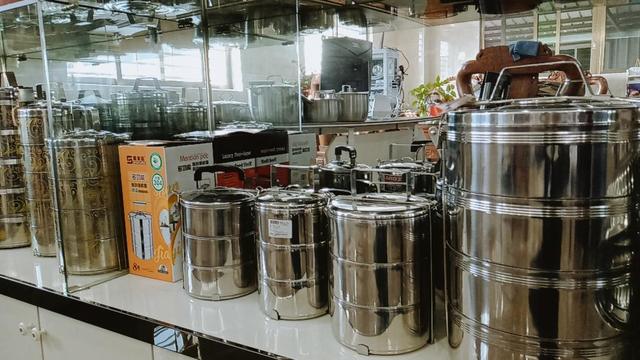
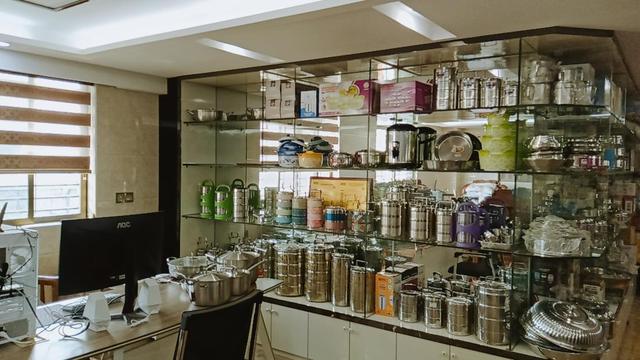
The company focuses on the production of stainless steel frying pans, saucepans, stock pots, sauté pans, casserole pots, steamers, cookware sets, and customized kitchenware products. Utilizing advanced manufacturing equipment, automated polishing lines, precision forming technologies, and strict quality management procedures, Sarap Kitchen delivers cookware solutions designed for durability, heat distribution efficiency, and long-term performance.
Serving distributors, retailers, hospitality groups, cookware brands, and foodservice equipment suppliers, Sarap Kitchen offers flexible OEM and ODM manufacturing services. Customers can customize product specifications, materials, surface finishes, handles, packaging, branding, and private-label requirements to meet diverse market demands.
Innovation and product development remain central to the company's growth strategy. Its engineering team continuously explores improvements in multi-ply construction, induction-compatible designs, ergonomic features, and sustainable manufacturing practices. Every product undergoes rigorous inspection throughout the production process to ensure consistency and compliance with international quality standards.
Today, Foshan Sarap Kitchen Co., Ltd. exports to North America, Europe, the Middle East, Southeast Asia, South America, and other global markets. Through reliable manufacturing capabilities, customer-oriented service, and continuous product innovation, the company supports partners seeking high-quality stainless steel cookware solutions for both household and commercial kitchens.
How customized structural models adapt to diverse commercial operational climates.
Commercial food service equipment operates across a variety of conditions, each requiring specific configurations to ensure optimal performance:
Requires premium visuals, zero-noise hydraulic roll-top covers, and stable induction heating. Sleek, polished metal and integrated designs help maintain a premium brand aesthetic.
Requires marine-grade SUS 316 stainless steel to withstand salty, humid conditions. Marine installations also need non-slip locking bases to keep servers secure in rough seas.
Focuses on maximum food capacity, heavy-duty build quality, and easy replenishment access. The prioritized design feature here is long-term thermal retention to minimize energy costs.
Detailed metallurgical, logistical, and structural answers to simplify global procurement processes.