In modern commercial gastronomy, industrial baking, and retail houseware markets, the demand for Custom OEM Stainless Steel Mixing Bowls has reached unprecedented volumes. Beyond simple kitchen receptacles, mixing bowls function as critical touchpoints in the cold chain, chemical preparation, and mechanical processing of food ingredients. The global market landscape is rapidly transitioning toward premium grade austenitic steel configurations due to changing health regulations, food preparation safety rules, and the ongoing optimization of B2B procurement processes.
"According to industrial supply chain metrics, professional kitchen prep surfaces and mixing vessels manufactured from non-passivated or inferior alloys show a 40% higher susceptibility to microscopic pitting corrosion, which can compromise biological food safety parameters under standard FDA/LFGB audits."
Our manufacturing facility in Foshan, Guangdong Province, responds to this global requirement by implementing automated processing methodologies. Under the management of Foshan Sarap Kitchen Co., Ltd., we deliver custom-manufactured batch orders of mixing bowls designed for structural longevity, balance, and chemical resistance. B2B buyers and brand owners benefit from an integrated production ecosystem that handles raw materials, deep drawing, surface treatment, and finishing in one unified workflow.
Global demand is driven by the growth of fast-casual dining, baking franchises, and high-quality residential kitchen retail. Commercial enterprises require nesting bowl configurations to optimize space utilization.
By producing in Foshan, the global kitchenware manufacturing capital, we ensure low material sourcing lead times, seamless shipping connections, and highly competitive unit economics.
Our formulas focus on food-grade SUS304 and SUS316 austenitic stainless steel, providing high oxidation resistance and defense against organic acids found in culinary applications.
For procurement managers evaluating OEM options, understanding the metallurgical composition of stainless steel mixing bowls is critical for ensuring product performance. Stainless steel is not a single alloy; its mechanical performance depends on its microscopic structure. At Foshan Sarap Kitchen Co., Ltd., we categorize our manufacturing based on strict engineering parameters:
| Steel Grade Designation | Alloy Composition (Nominal) | Corrosion Resistance | Ideal Application Scenario | Mechanical Strength (Tensile) |
|---|---|---|---|---|
| SUS 304 (Austenitic) | 18% Cr / 8% Ni | Excellent (Organic Acids) | Commercial Prep, Mixing, Residential Retail | ≥ 515 MPa |
| SUS 316 (Austenitic) | 16% Cr / 10% Ni / 2% Mo | Outstanding (Salts, Marinades) | Industrial Food Processing, Acidic Prep | ≥ 520 MPa |
| SUS 201 (Manganese Sub) | 15% Cr / 1% Ni / 5.5% Mn | Moderate (Dry Ingredients only) | Low-Cost Consumer Promotional Items | ≥ 550 MPa |
During deep-drawing processes, the steel sheets are subjected to hydraulic presses of up to 800 tons. This changes the crystalline structure of the metal. If the alloy lacks sufficient nickel content (as seen in low-end 201 series), the stress induces micro-cracking and work-hardening, making the vessel brittle over time.
By utilizing high-grade Austenitic 304 Stainless Steel, we guarantee that the finished mixing bowls retain ductility and dimensional stability, resisting dents when subjected to high-speed commercial planetary mixers. The protective chromium oxide (Cr₂O₃) passivation layer naturally forms on the surface of our products, providing a self-healing barrier against oxidation, exposure to chlorine-based sanitizers, and acid washdowns.
Every brand requires a distinct value proposition to differentiate itself on shelves and online marketplaces. Our factory offers fully integrated OEM and ODM design pipelines. The custom options are structured into key technical categories:
We provide multiple exterior finishes, including high-gloss mirror polishing, fine-satin brushing, durable powder coating, and physical vapor deposition (PVD) color plating. Mirror-polished interiors prevent ingredient adhesion, reducing wash time in commercial settings.
Choose from standard round bases, flat-bottom profiles, or custom silicone-molded non-slip bases. Silicone bases are vulcanized directly to the steel, preventing separation during thermal sanitation cycles in commercial dishwashers.
We design custom-fit lids utilizing food-grade polypropylene, high-temperature silicone, or matching stainless steel. These range from simple dust covers to airtight snap-lock lids designed for food storage and preservation.
Our engineering department uses CAD modeling to simulate stress loads and nesting tolerances. When shipping products globally, nested dimensions directly impact container utilization factors. By optimizing the draft angles of our bowls, we increase nesting density, reducing ocean freight costs per unit by up to 25%.
Technical Customization Capability: Internal laser-etched volume indicators are calibrated to precision standards, ensuring accurate ingredient measurement in both metric and imperial units. This feature is particularly useful for commercial kitchens where efficiency is key.
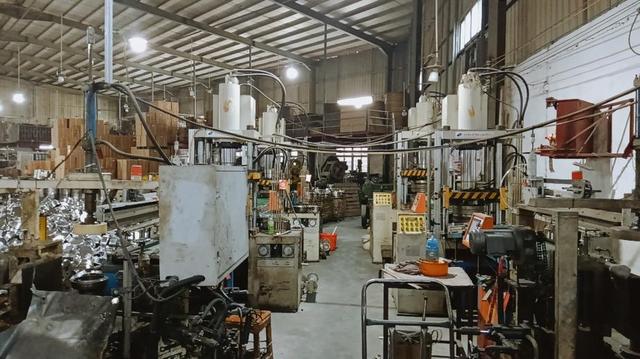
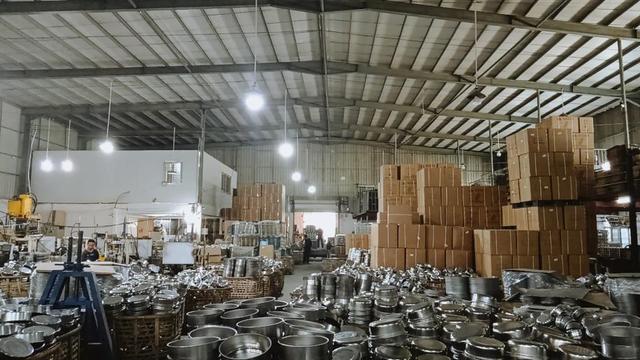
Established in 2011 in the industrial manufacturing hub of Foshan, Guangdong Province, Foshan Sarap Kitchen Co., Ltd. has grown into a leading cookware manufacturer. Our facility covers over 22,000 square meters and is equipped with advanced metal forming and finishing technologies. Supported by a workforce of more than 250 employees, we maintain complete control over the production workflow, from raw material coils to packaged containers.
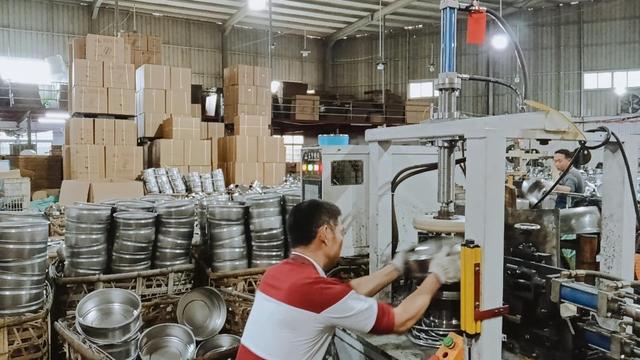
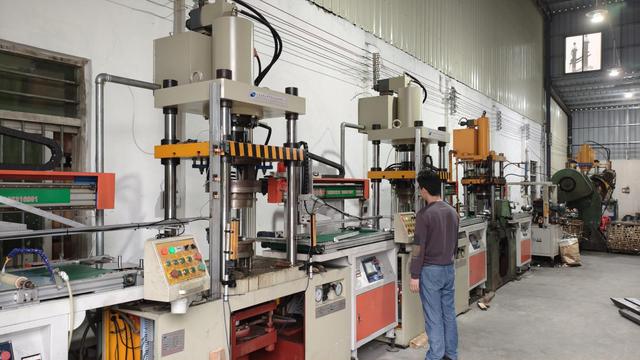
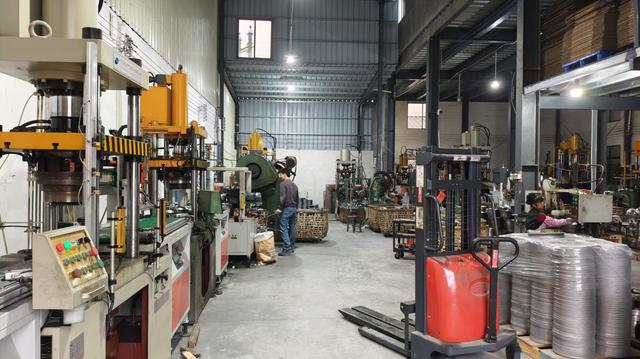
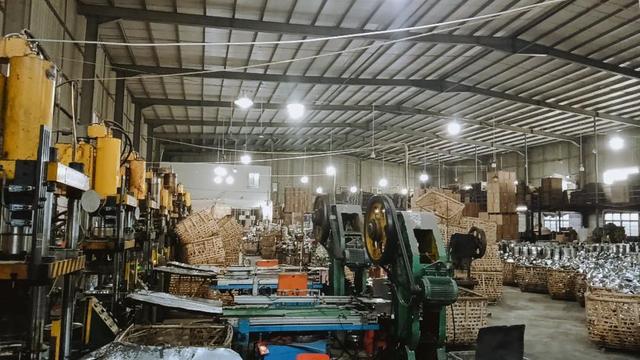
Our factory floor features automated polishing lines, hydraulic presses ranging from 100 to 800 tons, CNC trim stations, and automated laser marking equipment. This machinery minimizes dimensional variances, keeping tolerances within ±0.2mm across production batches.
Our quality assurance program involves incoming material chemical checks, in-line visual and thickness audits, and final quality control checks. We perform salt spray tests to verify corrosion resistance and coordinate third-party food contact compliance audits.
Through years of supplying international cookware brands, retail chains, and hospitality providers, we have streamlined our B2B export workflows. Our proximity to the ports of Guangzhou, Shenzhen, and Hong Kong allows us to offer flexible shipping terms and reliable delivery schedules to North America, Europe, the Middle East, and Southeast Asia.
Stainless steel mixing bowls are utilized across a variety of food-service and industrial preparation environments. To assist B2B distributors, we highlight specific target applications and localized market requirements:
| Target Sector | Technical Design Requirements | Compliance Standards (Local) | Value-Added Features |
|---|---|---|---|
| Commercial Bakeries (US & Europe) | Deep walls, stable flat-bottom, standard planetary mixer compatibility. | FDA Food Contact, NSF Standard 2, Regulation (EC) 1935/2004 | Integrated handles, laser-etched fill lines. |
| QSR & Fast Food Franchises | Impact resistance, nesting capability, easy sanitation. | ANSI/NSF Standard 2, LFGB Compliant | Heavy-duty 1.0mm wall thickness, stackable rims. |
| Consumer Kitchenware Retail | Aesthetic finish, silicone non-slip bases, matching storage lids. | REACH Compliant, Prop 65 (Lead-free) | Colored exterior finishes, decorative gift box packaging. |
Compliance with regional food contact safety laws is a key requirement for imports. Our products undergo rigorous extraction testing for heavy metals (including Chromium, Nickel, Manganese, and Copper) to ensure no metallic transfer occurs during food preparation. This testing is crucial for entry into strict markets like Germany, France, and California.
The commercial kitchenware industry continues to evolve, driven by sustainability targets and production automation. At Foshan Sarap Kitchen Co., Ltd., we are updating our production processes to meet these trends:
We are reducing our environmental footprint by installing closed-loop water filtration systems in our polishing lines, minimizing waste discharge and reducing water consumption by 60%.
We are designing bowls with optimized balance points and integrated thermal insulation (double-walled construction) to maintain temperature control during delicate mixing and preparation stages.
We are integrating tracking protocols from raw material sourcing to shipping, allowing clients to trace the steel heat number used in their production runs.
By upgrading our facilities with energy-efficient induction heating lines and automated packing systems, we aim to shorten production lead times while maintaining consistent product quality.