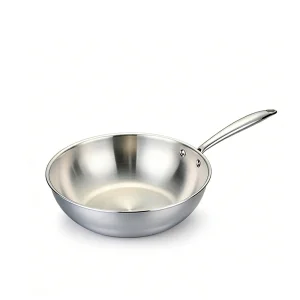
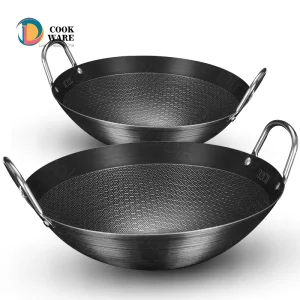
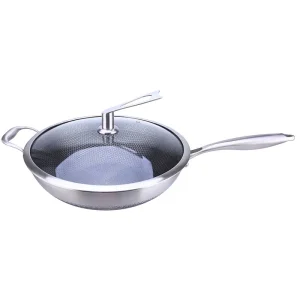
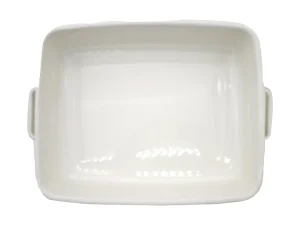
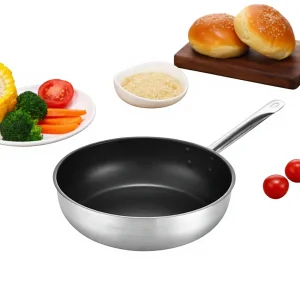
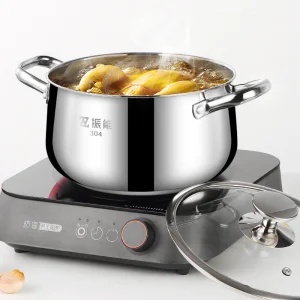
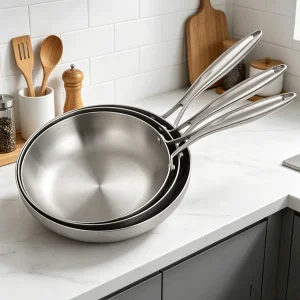
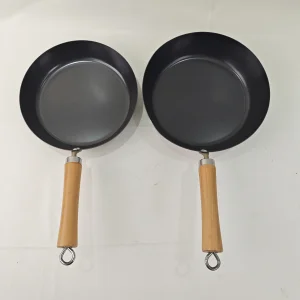
Discover our flagship engineering designs utilized by commercial bakeries, foodservice operators, and global private labels.
Within the highly demanding environments of fast-casual food systems, regional pizzerias, and high-throughput baking facilities, the longevity, cleanliness, and thermal consistency of food-contact surfaces are paramount. Traditionally, aluminum and cast iron dominated the baking tray sector. However, material scientists and manufacturing engineers have catalyzed a significant paradigm shift toward austenitic stainless steel pizza pans. This transition is motivated by strict sanitation requirements (such as Hazard Analysis Critical Control Point, or HACCP), structural integrity under intense heat, and the elimination of heavy metal migration into acidic food ingredients (like tomatoes and citric acid sauces).
Unlike aluminum, which can oxidize and leach under acidic environments, food-grade 304 and 316 stainless steels maintain complete biological inertness. In high-volume operations, this safeguards food flavor integrity and guarantees total compliance with international food contact standards (EU, LFGB, and US FDA).
As a leading pioneer in China's metallurgical and cookware production corridor, Foshan Sarap Kitchen Co., Ltd. has spent over a decade establishing itself as a trusted partner for OEM/ODM clients worldwide. Since our founding in 2011, we have engineered custom stainless steel bakeware solutions that optimize heat transfer, resist warping, and scale easily inside automated baking systems.
To construct a pizza pan capable of surviving thousands of thermal cycles between room temperature and 450°C (842°F) without warping requires complex thermodynamic design. The engineering team at Sarap Kitchen addresses these mechanical stresses through detailed design processes:
Formulated primarily with SUS304 (18/8 Chrome-Nickel). This configuration generates an passive chromium oxide layer that prevents oxidation, rust, and surface degradation under constant exposure to moisture and high heat.
Proprietary structural ribbing and reinforced rolled rims absorb anisotropic thermal expansion. This eliminates "oil-canning"—the sudden snapping or warping of flat metal sheets under heat.
Precise laser-perforated flow patterns facilitate optimal steam venting from the bottom of the crust. This allows direct heat conduction, producing the characteristic crisp texture desired in professional pizza prep.
Additionally, we utilize multi-ply cladding technology when required by professional clients. By encapsulating a high-conductivity aluminum core between two sheets of surgical-grade stainless steel, we achieve a material that heats up rapidly and evenly, eliminating the hot spots common in single-layer steel pans.
| Material Configuration | Thermal Conductivity | Tensile Strength (MPa) | Corrosion Resistance Index | Optimal Application |
|---|---|---|---|---|
| Monobloc SUS304 Steel | 16.2 W/m·K | 515 Min | High (Acid Resistant) | Deep-dish pans, conveyor baking ovens |
| Tri-Ply Clad (Steel-Alum-Steel) | 230 W/m·K (Core) | 600+ | High (Outer Layer) | Neapolitan crusts, rapid-heat decks |
| Carbon Steel (Ref. Standard) | 54 W/m·K | 400 | Low (Requires Seasoning) | Traditional high-heat baking |
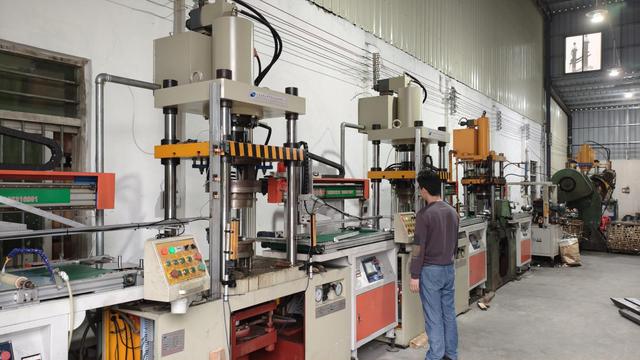
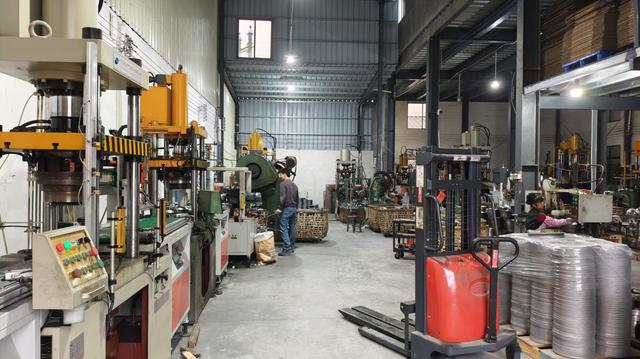
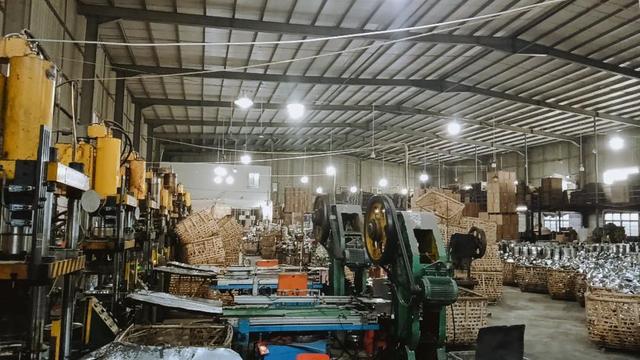
Operating from our modern facility in Foshan, Guangdong Province—the epicenter of China's high-end metalware manufacturing sector—Foshan Sarap Kitchen Co., Ltd. spans a production workspace of over 22,000 square meters. Our dedicated workforce of more than 250 skilled employees and engineers handles everything from raw material verification to final export logistics.
Since 2011, we have built a manufacturing infrastructure designed for large-scale custom production. Rather than relying on simple stamping presses, our facility is equipped with:
This commitment to manufacturing technology ensures that every batch of OEM bakeware delivered matches the quality of custom-engineered culinary equipment.
Global supply chains require consistent reliability. Operating within the Foshan manufacturing hub, Sarap Kitchen leverages an integrated ecosystem of steel mills, tool makers, and port facilities. This allows us to source raw materials, design custom tooling, and begin mass production faster than manufacturers in other regions.
Our "Factory 4.0" initiative integrates advanced digital systems into our manufacturing line. By using computerized scheduling and real-time metal composition analysis, we maintain stable production speeds and low defect rates. This supply chain efficiency translates to direct savings and reliable delivery schedules for our global B2B procurement partners.
Different markets demand unique solutions. Rather than offering a one-size-fits-all product catalog, Sarap Kitchen designs customized programs tailored to specific commercial channels:
We produce deep-drawn, heavy-duty pans with highly consistent tolerances. This ensures they slide easily into conveyor ovens, stack efficiently, and stand up to high-volume commercial dishwashing.
Our mirror-polished, corrosion-resistant designs are ideal for open kitchens and buffet settings where presenting high-quality, clean visual displays to guests is important.
We offer complete customization packaging solutions, including laser-etched branding, custom cardboard inserts, and retail-ready display boxes designed for direct market placement.
Navigating the shifting regulatory requirements of global customs can be a bottleneck for import teams. Sarap Kitchen manages this complexity by ensuring all cookware shipments comply with international safety regulations:
By handling these regulatory requirements directly at the factory stage, we minimize delays and help our partners import products quickly and efficiently.
To stay ahead of changing baking trends, our engineering and R&D teams focus on two primary design initiatives:
We are developing mechanical, micro-textured nonstick surfaces that do not rely on fluoropolymers. By etching micro-patterns directly into the stainless steel, we reduce dough adhesion while maintaining a hard surface that is safe for metal utensils.
As commercial kitchens transition toward cleaner, electric induction systems, we are incorporating magnetic ferritic stainless steel (such as SUS430) into our multi-ply pan designs to ensure compatibility with modern induction hearths.
Our simplified product onboarding workflow ensures clear communication and quality control at every stage of development:
| Phase | Milestone Activity | Deliverables / Output | Estimated Duration |
|---|---|---|---|
| Phase 1: Design | Review mechanical requirements, material specifications, and cross-sectional CAD files. | 2D/3D technical blueprints for approval | 3 - 5 Days |
| Phase 2: Prototyping | Laser-cut test pans and run mechanical forming trials to verify tolerances. | Physical sample sent for kitchen testing | 7 - 10 Days |
| Phase 3: Tooling | Produce hardened stamping dies and polishing jigs for mass manufacturing. | Completed production tooling setup | 20 - 25 Days |
| Phase 4: Production | Run material stamping, automated polishing, quality control testing, and packaging. | Finished product batch ready for QC inspect | 25 - 35 Days |
Important technical and commercial details to consider when choosing stainless steel cookware partners.
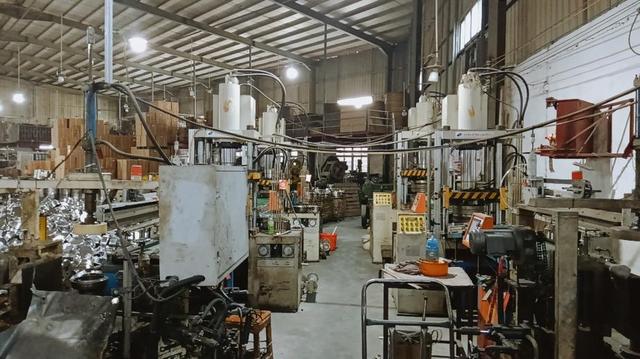
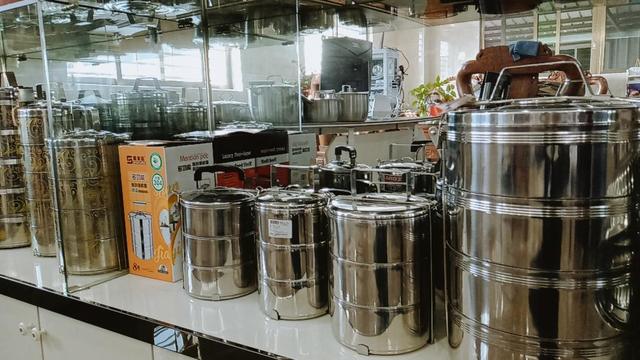
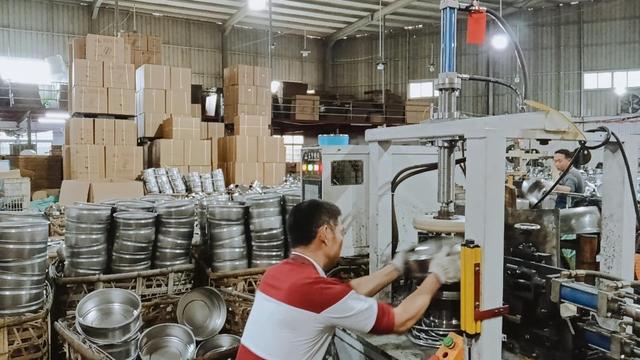
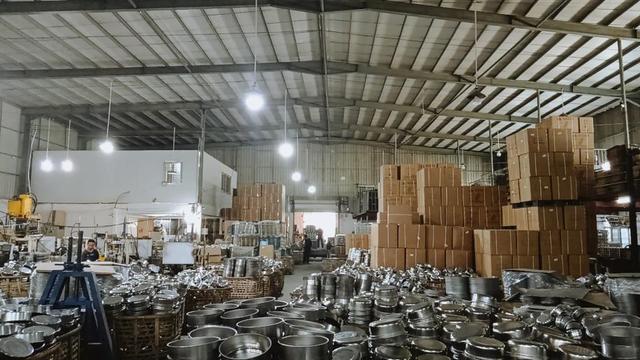
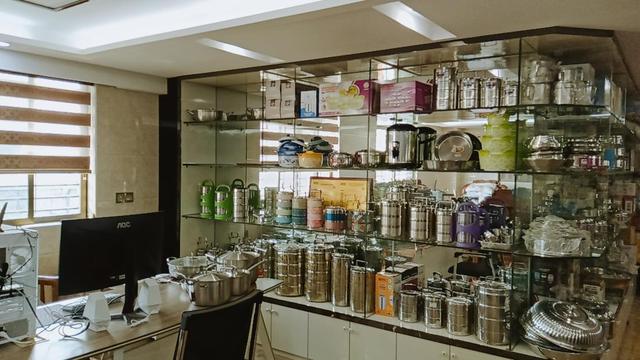
A look inside our 22,000 square meter manufacturing facility in Foshan, showcasing our production standards and warehouse operations.
Explore our wider catalog of commercial-grade pans, woks, and specialty kitchen equipment designed for international markets.